In the world of industrial packaging, efficiency, reliability, and product protection are paramount. For businesses handling bulk quantities of powders, granules, flakes, or other dry flowable materials, the big bag packaging machine, also known as a Flexible Intermediate Bulk Container (FIBC) filler, is a cornerstone of modern operations. This comprehensive guide delves into the types, uses, and critical buying tips for these powerful systems, helping you make an informed investment for your production line.
What is a Big Bag Packaging Machine?
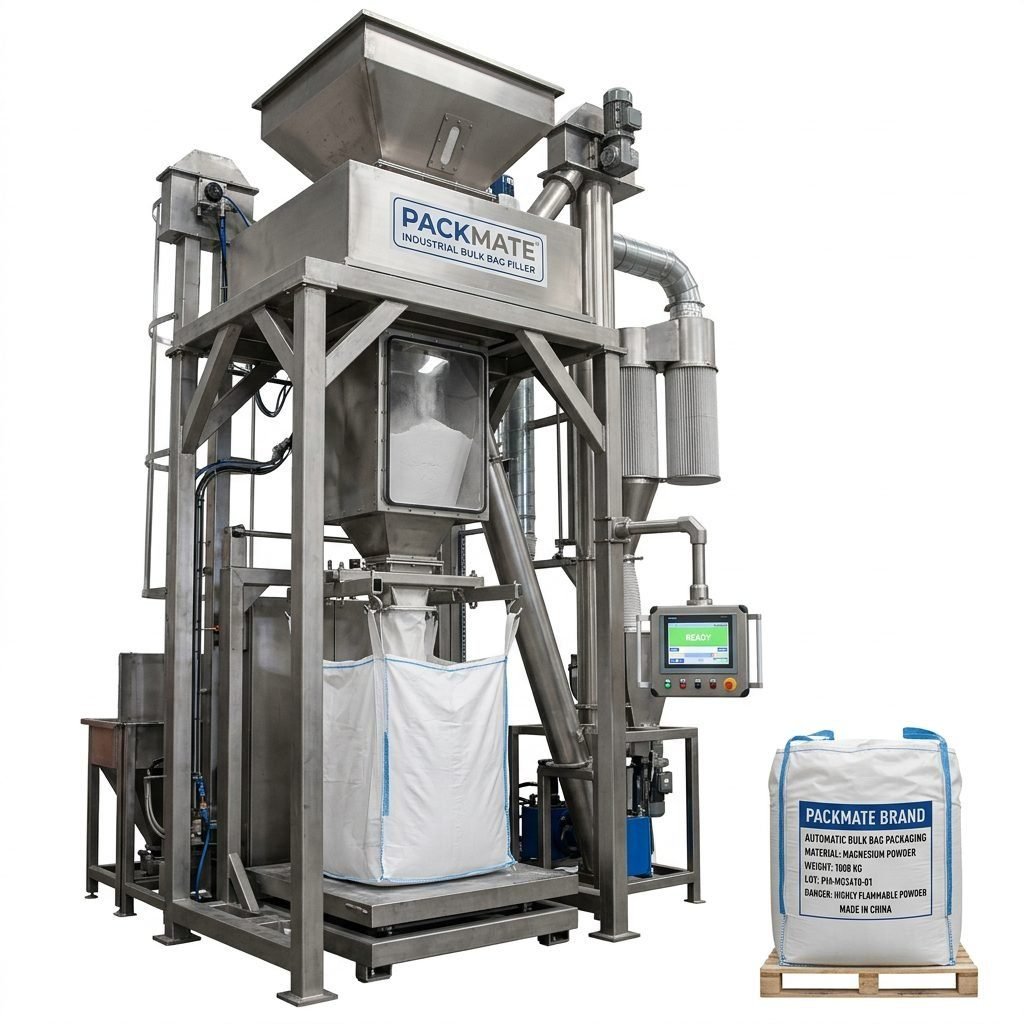
A big bag packaging machine is a specialized piece of equipment designed to automatically fill, weigh, and sometimes seal large industrial bags known as FIBCs or bulk bags. These bags typically range from 500kg to 2,000kg in capacity. The machine automates the process of placing an empty bag on a filling spout, precisely dispensing the product by weight or volume, and then discharging the filled bag for transport or storage. This automation significantly reduces manual labor, minimizes product loss and contamination, and ensures consistent, accurate fills.
Key Advantages of Automation
Transitioning from manual filling to an automated big bag system offers transformative benefits:
Enhanced Efficiency: Drastically increases output speed compared to manual methods.
Superior Accuracy: Integrated weighing systems ensure each bag meets exact weight specifications, reducing giveaways and ensuring compliance.
Improved Safety: Eliminates heavy lifting and repetitive strain injuries for workers.
Reduced Contamination: Closed or dust-controlled systems protect product purity.
Cost Savings: Lower labor costs, reduced product waste, and optimized material handling.
Primary Types of Big Bag Packaging Machines
Choosing the right type of machine depends on your product characteristics, required speed, and plant layout. The main configurations are:
1. Manual Station Machines
These are semi-automatic units where an operator manually attaches the empty bag to the filling spout and initiates the cycle. They are a cost-effective entry point for lower-volume operations or facilities with variable bag sizes and products. While they require more operator involvement, they offer flexibility.
2. Automatic Bag Placers / Robotic Systems
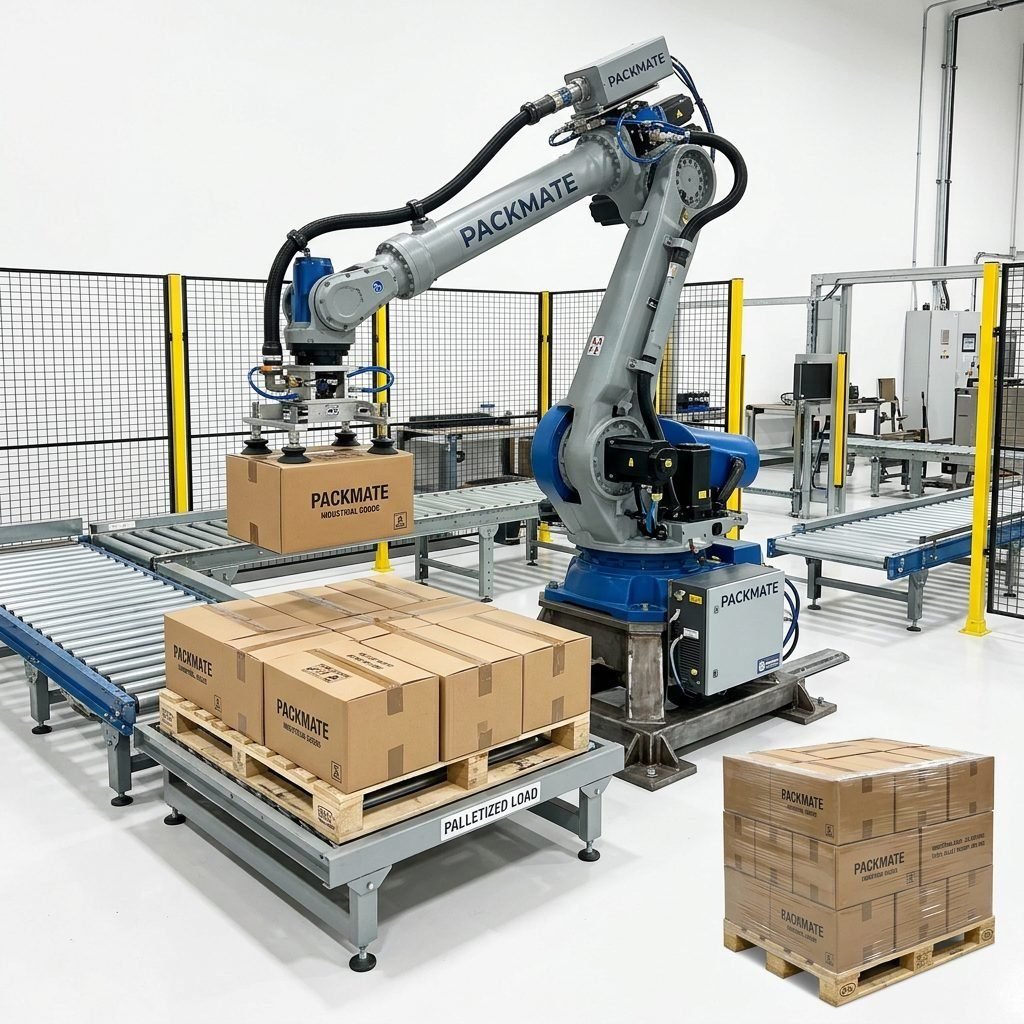
For high-volume production, fully automatic systems integrate a robotic arm or bag placer that picks an empty bag from a magazine, positions it on the filling spout, and releases it once filled. This creates a truly hands-off operation, maximizing throughput and minimizing labor. These systems are ideal for large-scale, continuous production environments.
3. Net Weighers vs. Gross Weighers
This distinction refers to the weighing methodology:
Net Weighers: The product is weighed in a hopper above the bag before discharge. This is highly accurate and suitable for most free-flowing products. The bag’s weight is not part of the measurement.
Gross Weighers: The entire bag, spout, and supporting structure are weighed during filling. This method compensates for bag weight variations and is often used for less free-flowing or sticky materials. The system continuously weighs the load cell platform.
4. Pressurized vs. Gravity Feed
Gravity Feed: Relies on the product’s natural flow from an overhead bin. Best for free-flowing granules and powders.
Pressurized (or Force-Flow) Feed: Uses air pressure or vibrating trays to assist product flow. Essential for cohesive, compactable, or very fine powders that do not flow easily by gravity alone.
Core Applications and Industry Uses
Big bag packaging machines serve a vast array of industries. Their versatility in handling different materials makes them indispensable.
Food & Agriculture
From flour, sugar, and starch to animal feed, grains, and soy protein. Hygiene and dust control are critical. Machines for this sector often feature easy-clean designs and food-grade contact surfaces.
Chemicals & Minerals
Fertilizers, polymers, resins, silica sand, and various industrial compounds. Systems must be constructed from corrosion-resistant materials and may require explosion-proof ratings for certain chemicals.
Pharmaceuticals & Nutraceuticals
Active pharmaceutical ingredients (APIs), excipients, and powdered supplements. Here, containment and preventing cross-contamination are non-negotiable. Isolated, contained systems with high-efficiency particulate air (HEPA) filtration are common. Companies like Packmate Machinery, with decades of expertise, develop solutions that meet stringent industry standards for these sensitive applications.
Building Materials
Cement, gypsum, mortar mix, and other construction powders. Durability to handle abrasive materials is a key requirement.
Essential Buying Tips for Your Investment
Selecting the right big bag packer is a significant decision. Here are the crucial factors to consider:
1. Analyze Your Product Thoroughly
This is the most critical step. Define your material’s properties: Is it free-flowing, cohesive, abrasive, hygroscopic, or explosive? The particle size, density, and angle of repose will directly determine the required feed system (gravity vs. pressurized), hopper design, and spout type.
2. Determine Your Required Throughput
Calculate your required bags per hour. Manual stations handle 20-60 bags/hour, while fully automatic robotic systems can exceed 120 bags/hour. Match the machine’s speed to your current and future projected needs to avoid bottlenecks or over-investment.
3. Evaluate Bag Specifications and Changeover
What are the sizes and types of FIBCs you use? Consider spout dimensions (top and bottom), lifting loop configuration, and bag material. How often will you change bag sizes? Quick-change systems for spout adapters and bag height adjustment can save valuable production time.
4. Prioritize Accuracy and Control Systems
Weight accuracy directly impacts your bottom line. Look for machines with high-quality load cells and stable, vibration-isolated weighing frames. The control system should be user-friendly, allow recipe storage for different products, and provide comprehensive data reporting. Modern machines often feature touchscreen HMIs for intuitive operation.
5. Focus on Build Quality and Support
The machine must withstand a harsh industrial environment. Inspect the construction quality, material thickness, and the reputation of key components (PLC, load cells, motors). Crucially, assess the manufacturer’s after-sales support. Availability of spare parts, technical assistance, and service engineers is vital for minimizing downtime. Partnering with an established manufacturer like Packmate, which boasts a professional team and modern facility, ensures long-term reliability.
6. Consider Integration and Safety Features
How will the machine fit into your existing line? Consider upstream feeding (from silos, mixers) and downstream handling (conveyors, palletizers). Safety features like emergency stops, guarding, and dust extraction ports are mandatory for operator protection and regulatory compliance.
Conclusion
Investing in a big bag packaging machine is an investment in operational excellence. By understanding the different machine types, clearly defining your product and output needs, and carefully evaluating manufacturers based on quality and support, you can select a system that delivers years of reliable, accurate, and efficient service. The right machine will pay for itself through labor savings, reduced waste, and enhanced production capacity, solidifying your competitive edge in the bulk materials market.
Frequently Asked Questions (FAQs)
1. What is the typical accuracy of a big bag weigher?
Modern net weigh systems can achieve accuracies within ±0.1% to ±0.2% of the target weight, depending on the product flow characteristics and system calibration. Gross weighers also offer high accuracy but can be influenced by external factors like bag movement.
2. Can one machine handle different bag sizes?
Yes, most machines are designed for flexibility. Look for models with adjustable spout heights, telescopic or interchangeable spouts, and programmable settings to easily switch between different FIBC sizes and weights stored in the control system’s memory.
3. How important is dust control?
Extremely important. Dust creation is a major concern for product loss, housekeeping, operator health, and potential explosion hazards. Ensure the machine has effective dust containment around the filling spout, with connections for a central dust collection system or integrated filters.
4. What kind of maintenance do these machines require?
Regular maintenance includes checking and calibrating load cells, inspecting seals and gaskets for wear, lubricating moving parts per the manufacturer’s schedule, and ensuring dust collection systems are functioning. A preventative maintenance plan from your supplier is highly recommended.
5. How do I choose between a net weigher and a gross weigher?
Choose a net weigher for standard, free-flowing products where speed and high accuracy are priorities. Opt for a gross weigher when handling materials that are sticky, compressible, or have very uneven flow, as weighing the bag during filling can provide better control for these challenging products.