Understanding Food Packaging Needs for Small Businesses
Small food businesses face unique challenges when selecting packaging equipment that balances affordability, efficiency, and quality output. The right packaging machine can transform your operation from manual labor-intensive processes to streamlined production that increases output while maintaining food safety standards. Whether you operate a bakery, specialty food manufacturer, catering service, or artisan food production facility, investing in appropriate packaging equipment represents a critical decision that impacts product quality, shelf life, operational costs, and business growth potential.
The food packaging machinery market offers diverse solutions ranging from simple heat sealers costing a few hundred dollars to sophisticated automated systems requiring substantial capital investment. Small businesses must carefully evaluate their specific requirements including production volume, product characteristics, packaging format preferences, available floor space, budget constraints, and future growth projections before committing to equipment purchases.
Essential Factors to Consider Before Purchasing
Making informed equipment decisions requires thorough analysis of multiple factors that influence packaging success. Understanding these considerations helps small business owners avoid costly mistakes and select machines that deliver long-term value.
Production Volume Requirements
Your current and projected production volumes directly determine the appropriate machine capacity and automation level. Small businesses typically start with equipment handling 20 to 100 packages per hour, which suits most artisan and specialty food operations. Calculate your daily, weekly, and seasonal production needs while accounting for growth projections over the next three to five years. Purchasing equipment with some excess capacity provides flexibility for business expansion without requiring immediate replacement.
Product Characteristics and Packaging Format
Different food products require specific packaging approaches based on their physical properties, shelf life requirements, and presentation needs. Liquid products demand different equipment than dry goods, while fragile items like baked goods need gentle handling systems. Consider factors including product moisture content, temperature sensitivity, oxygen sensitivity, required barrier properties, and desired shelf life when evaluating packaging machinery options.
Common packaging formats for small food businesses include:
• Flexible pouches and bags for snacks, dried fruits, nuts, and granola
• Vacuum-sealed packages for fresh meats, cheeses, and prepared meals
• Modified atmosphere packaging for extending fresh product shelf life
• Rigid containers and trays for baked goods, prepared foods, and deli items
• Flow wrap packaging for individual cookies, bars, and confections
Budget and Total Cost of Ownership
While initial purchase price represents an obvious consideration, smart business owners evaluate total cost of ownership including installation expenses, operator training, ongoing maintenance, consumable supplies, energy consumption, and potential downtime costs. Entry-level food packaging machines for small businesses typically range from 500 to 15,000 dollars, with most suitable options falling between 2,000 and 8,000 dollars depending on automation level and capabilities.
Space Availability and Facility Requirements
Small business facilities often face space constraints that limit equipment options. Measure available floor space carefully, accounting for operator access, material storage, and workflow considerations. Some machines require specific utilities including compressed air, special electrical connections, or water supply that may necessitate facility modifications. Compact tabletop machines suit businesses with limited space, while floor-standing units offer higher capacity but require dedicated floor space.
Regulatory Compliance and Food Safety
Food packaging equipment must meet applicable food safety regulations and facilitate compliance with labeling requirements, allergen controls, and traceability standards. Look for machines constructed from food-grade materials, featuring sanitary design principles that enable thorough cleaning, and supporting proper packaging integrity to maintain product safety throughout distribution and storage.
Top Food Packaging Machine Categories for Small Businesses
Understanding the primary categories of food packaging equipment helps narrow your selection to machines best suited for your specific application and business model.
Vacuum Sealing Machines
Vacuum sealers represent one of the most versatile and popular choices for small food businesses. These machines remove air from packages before sealing, extending shelf life significantly by reducing oxidation and inhibiting microbial growth. Chamber vacuum sealers offer the best performance for small business applications, accommodating liquids and moist products while providing consistent, reliable sealing results.
Chamber vacuum machines work by placing the entire package inside a chamber, evacuating air from both the chamber and package simultaneously, then sealing the bag before releasing the vacuum. This process prevents liquids from being drawn into the vacuum pump and enables use of less expensive chamber pouches rather than specialized embossed vacuum bags. Chamber vacuum sealers suitable for small businesses range from 1,500 to 6,000 dollars depending on chamber size and features.
Ideal applications for vacuum sealing include:
Fresh and Prepared Meats:
Vacuum packaging dramatically extends refrigerated shelf life for fresh cuts, marinated products, and cooked meats while preventing freezer burn for frozen items.
Artisan Cheeses:
Proper vacuum sealing preserves cheese quality, prevents moisture loss, and inhibits mold growth without affecting flavor development.
Prepared Meals and Sous Vide Products:
Vacuum sealing enables extended refrigerated storage for meal prep services and creates the oxygen-free environment required for sous vide cooking.
Coffee and Nuts:
Removing oxygen preserves freshness and prevents rancidity in products containing oils and volatile aromatic compounds.
Heat Sealing Equipment
Heat sealers create hermetic seals on thermoplastic films and bags through controlled application of heat and pressure. These machines range from simple handheld impulse sealers costing under 100 dollars to sophisticated continuous band sealers priced at several thousand dollars. For small food businesses, tabletop impulse sealers and foot-operated sealers provide excellent value and reliability.
Impulse sealers heat a metal wire only during the sealing cycle, allowing the sealing element to cool before the package is removed. This design prevents overheating and works well with most plastic films. Continuous heat sealers maintain constant temperature and suit high-volume operations requiring faster throughput. Band sealers move packages through heated sealing bars continuously, making them ideal for businesses packaging large quantities of similar products.
Heat sealing equipment works effectively for dry snack foods, baked goods, candy, dried fruits, granola, coffee, tea, spices, and numerous other products that do not require vacuum or modified atmosphere packaging. Equipment costs range from 50 dollars for basic handheld units to 3,000 dollars for heavy-duty band sealers with integrated printing capabilities for date coding and lot numbers.
Form Fill Seal Machines
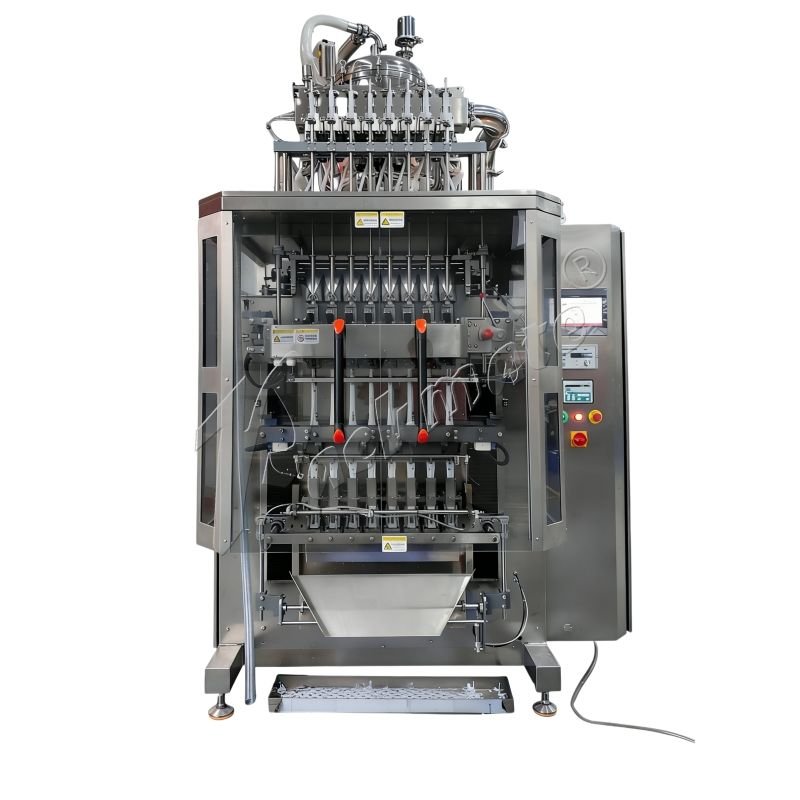
Form fill seal technology creates packages from rollstock film, fills them with product, and seals them in a continuous automated process. While traditionally associated with large-scale production, compact vertical form fill seal machines now serve small business needs effectively. These packaging machine systems offer significant labor savings and production consistency compared to manual bag filling and sealing operations.
Vertical form fill seal machines work by drawing flat rollstock film vertically through forming tubes that shape it into tubes. The film edges are sealed together creating a vertical back seal, then horizontal seals create individual packages. Product is dispensed into packages through the forming tube using volumetric fillers, weighing systems, or counting mechanisms depending on product characteristics. Small-scale VFFS machines suitable for businesses start around 8,000 dollars and can package 20 to 60 bags per minute depending on product and package size.
These machines excel at packaging free-flowing dry products including coffee, snack foods, nuts, dried fruits, granola, pet treats, and similar items. The automated process ensures consistent fill weights, uniform package appearance, and reduced labor costs while supporting business growth through increased production capacity.
Tray Sealing Systems
Tray sealers apply film lids to pre-formed trays containing food products, creating attractive packages ideal for fresh prepared foods, salads, meal kits, and deli items. These machines accommodate both standard atmosphere sealing and modified atmosphere packaging that replaces air with protective gas mixtures to extend shelf life. Manual and semi-automatic tray sealers suit small business production volumes, with pricing ranging from 3,000 to 12,000 dollars.
The tray sealing process involves placing filled trays on the machine platform, lowering a heated sealing head that bonds the film lid to the tray flange, then removing the sealed package. Advanced models incorporate gas flushing capabilities that evacuate air and inject protective gas blends before sealing. Tray sealing equipment works with various tray materials including plastic, aluminum, and fiber-based options, providing flexibility for different product requirements and sustainability goals.
Flow Wrapping Machines
Flow wrappers, also called horizontal form fill seal machines, create pillow-style packages by wrapping products in film with sealed ends. These machines package individual items or grouped products at speeds suitable for small business operations. Entry-level flow wrappers designed for small businesses cost between 5,000 and 15,000 dollars and can package 30 to 80 products per minute depending on size and complexity.
Flow wrapping works exceptionally well for bakery products including cookies, brownies, muffins, bread loaves, and pastries. The technology also suits nutrition bars, candy bars, soap bars, and numerous other solid products requiring individual wrapping. Modern compact flow wrappers feature user-friendly controls, quick changeover capabilities, and reliable performance that makes them accessible to small business operators without extensive technical backgrounds.
Specific Machine Recommendations by Food Category
Different food business types benefit from specific packaging solutions tailored to their unique product characteristics and market requirements.
Bakery and Confectionery Operations
Bakeries require packaging that maintains product freshness while showcasing visual appeal. Flow wrappers represent the gold standard for individual bakery item packaging, creating professional pillow packs that protect products while displaying them attractively. For businesses not ready to invest in flow wrapping equipment, quality heat sealers combined with pre-made bags offer cost-effective alternatives.
Recommended equipment for bakery operations includes tabletop flow wrappers for cookies, bars, and individually wrapped items, bag sealers with date coding for bread and bulk baked goods, and window film options that showcase product appearance while providing necessary protection. Budget 6,000 to 12,000 dollars for a capable flow wrapper or 1,000 to 3,000 dollars for a comprehensive heat sealing setup with accessories.
Fresh Meat and Seafood Processors
Meat and seafood businesses absolutely require vacuum packaging capabilities to ensure food safety and maximize shelf life. Chamber vacuum sealers provide the most reliable performance, handling moist products without issues and delivering consistent seal quality. Packaging machine selection should prioritize chamber size adequate for your largest products, powerful vacuum pumps for quick cycle times, and stainless steel construction for durability in demanding environments.
Essential features for meat and seafood vacuum sealers include:
• Stainless steel chamber construction for easy cleaning and sanitation
• Powerful vacuum pumps capable of achieving 99 percent air removal
• Adjustable sealing time and temperature for different film types
• Liquid control features to prevent moisture from entering the pump
• Double seal bars for enhanced package security
• Gas flush capability for modified atmosphere packaging options
Budget 2,500 to 5,000 dollars for a quality chamber vacuum sealer suitable for small meat processing operations. This investment pays dividends through extended product shelf life, reduced waste, and enhanced product presentation that commands premium pricing.
Prepared Food and Meal Prep Services
Meal preparation businesses benefit from tray sealing systems that create attractive, convenient packages for prepared entrees, salads, and meal components. Modified atmosphere tray sealers extend refrigerated shelf life to five to seven days or longer depending on the product and gas mixture used. This extended shelf life enables broader distribution and reduces waste from unsold products.
For businesses focusing on frozen meal offerings or products requiring longer shelf life, vacuum chamber sealers provide excellent alternatives. Many meal prep services use combination approaches, employing tray sealers for fresh refrigerated offerings and vacuum sealers for frozen products or longer-term storage items. Expect to invest 4,000 to 10,000 dollars for a capable tray sealing system or 2,000 to 4,000 dollars for a vacuum sealing solution.
Snack Food and Dry Goods Producers
Businesses producing snack foods, dried fruits, nuts, granola, coffee, tea, and similar dry products gain tremendous efficiency from vertical form fill seal machines. These automated systems eliminate manual bag filling and sealing labor while ensuring consistent fill weights and professional package appearance.
Small-scale VFFS machines designed for emerging brands offer impressive capabilities at accessible price points. Look for machines featuring accurate weighing systems, easy film changeover, nitrogen flushing capabilities for oxygen-sensitive products, and user-friendly controls. Budget 8,000 to 18,000 dollars for an entry-level vertical form fill seal system including product feeding equipment. For businesses not ready for this investment, quality band sealers combined with pre-made bags provide interim solutions costing 1,500 to 3,500 dollars.
Specialty and Artisan Food Producers
Artisan food producers often emphasize premium quality and unique presentation that differentiates their products in competitive markets. Packaging equipment selection should support these brand values while providing necessary product protection. Many specialty food businesses succeed with versatile vacuum sealers that handle diverse product types or quality heat sealing equipment paired with custom-printed bags that communicate brand identity effectively.
Consider equipment flexibility when producing multiple product types with varying packaging requirements. Chamber vacuum sealers with gas flush capabilities provide maximum versatility, accommodating products requiring different atmospheric conditions. Alternatively, investing in multiple specialized machines dedicated to specific product categories may prove more efficient than attempting to use single machines for diverse applications.
Additional Equipment and Accessories
Complete packaging operations require more than just the primary sealing or wrapping equipment. Several accessories and complementary machines enhance efficiency, quality, and compliance.
Labeling Equipment
Proper product labeling ensures regulatory compliance while communicating essential information to consumers. Manual label applicators suit very small operations, while semi-automatic label dispensers significantly increase efficiency for growing businesses. Budget 300 to 2,500 dollars for labeling equipment depending on automation level and label size capacity.
Date Coding and Printing Systems
Applying production dates, best-by dates, lot codes, and other variable information directly on packages ensures traceability and compliance. Handheld inkjet printers provide affordable solutions starting around 300 dollars, while integrated printing systems on packaging machines offer automated coding. Many band sealers include optional printing attachments that apply codes during the sealing process.
Weighing and Portioning Equipment
Accurate product weighing ensures consistent portions, regulatory compliance, and cost control. Digital portion scales suitable for food businesses range from 100 to 1,000 dollars depending on capacity and precision requirements. Automated weighing systems integrated with packaging machine equipment provide higher throughput but require larger investments.
Film and Bag Supplies
Ongoing consumable costs significantly impact total packaging expenses. Research film and bag suppliers carefully, comparing pricing, minimum order quantities, lead times, and quality. Many packaging machine manufacturers offer compatible films and bags, though third-party suppliers may provide cost advantages. Budget approximately 0.05 to 0.30 dollars per package for film and bag materials depending on size, material type, and barrier properties required.
Evaluating Equipment Suppliers and Support
Selecting the right equipment supplier proves as important as choosing the correct machine. Reliable suppliers provide ongoing support that maximizes equipment performance and minimizes downtime throughout the machine’s operational life.
Technical Support and Training
Comprehensive operator training ensures your team can operate equipment effectively from day one. Quality suppliers provide detailed training covering machine operation, basic troubleshooting, routine maintenance, and safety procedures. Ongoing technical support via phone, email, or remote connectivity helps resolve issues quickly when they arise. Evaluate supplier support capabilities including response times, technician availability, and support costs before committing to equipment purchases.
Parts Availability and Service
Equipment eventually requires replacement parts and periodic service. Suppliers maintaining adequate parts inventory and offering reasonable lead times minimize production disruptions when maintenance becomes necessary. Ask about parts availability, typical lead times, warranty coverage, and service options including on-site technician visits or depot repair services.
References and Reputation
Research potential suppliers thoroughly by reading customer reviews, checking industry references, and speaking with other businesses using similar equipment. Established suppliers with strong reputations typically provide better long-term support than unknown vendors offering seemingly attractive pricing. Consider supplier longevity, financial stability, and commitment to the food packaging industry when making selection decisions.
Making the Investment Decision
Purchasing packaging equipment represents a significant investment for small businesses that must be evaluated carefully using sound financial analysis and strategic planning.
Return on Investment Calculations
Calculate expected ROI by comparing current packaging costs and labor requirements against projected costs with new equipment. Consider labor savings, increased production capacity, reduced material waste, extended product shelf life, and potential for premium pricing when determining financial benefits. Most small businesses achieve payback periods of 12 to 36 months for packaging equipment investments depending on production volumes and operational efficiencies gained.
Key ROI considerations include:
• Labor cost reduction from automated or semi-automated packaging processes
• Increased production capacity enabling business growth and additional revenue
• Material cost savings from reduced waste and efficient film usage
• Extended shelf life reducing product waste and expanding distribution options
• Improved package consistency and appearance supporting premium pricing
• Enhanced food safety and compliance reducing liability risks
Financing Options
Several financing approaches help small businesses acquire necessary packaging equipment without depleting working capital. Equipment financing and leasing programs spread costs over time while preserving cash for other business needs. Many packaging equipment suppliers offer financing arrangements or can recommend specialized equipment finance companies. Compare interest rates, terms, and total costs when evaluating financing options against outright purchase.
Starting Small and Scaling Up
Many successful food businesses begin with basic packaging equipment and upgrade as production volumes and revenues increase. This conservative approach minimizes initial investment risk while allowing businesses to learn packaging requirements through hands-on experience. Packaging machine technology advances continuously, so delaying major investments until business models are proven can provide access to improved equipment at better value.
Maintenance and Operational Best Practices
Proper equipment maintenance and operation maximize performance, minimize downtime, and extend machine life, protecting your investment and ensuring consistent production capabilities.
Daily Maintenance Routines
Establish daily maintenance procedures including cleaning all food contact surfaces, inspecting sealing elements for wear or damage, verifying proper operation of safety features, and checking consumable supplies. Consistent daily maintenance prevents minor issues from becoming major problems that disrupt production and require costly repairs.
Scheduled Preventive Maintenance
Follow manufacturer recommended maintenance schedules for lubrication, parts replacement, and system inspections. Preventive maintenance extends equipment life, maintains optimal performance, and prevents unexpected breakdowns during critical production periods. Document all maintenance activities to track equipment history and identify recurring issues requiring attention.
Operator Training and Documentation
Ensure all operators receive thorough training on correct equipment operation, safety procedures, basic troubleshooting, and routine maintenance tasks. Maintain detailed operating procedures and quick reference guides near equipment to support consistent operation across different shifts and operators. Well-trained operators prevent equipment damage and produce higher quality packages with less waste and fewer rejects.
Future-Proofing Your Packaging Investment
Smart equipment selection considers not only current needs but also future business evolution and industry trends that may impact packaging requirements over time.
Scalability and Upgrade Paths
Choose equipment offering clear upgrade paths as your business grows. Some machines support modular expansion with additional features, increased automation, or integrated systems that enhance capabilities without complete replacement. Understanding upgrade options helps protect initial investments while supporting business evolution.
Sustainability Considerations
Consumer demand for sustainable packaging continues intensifying, making equipment compatibility with eco-friendly materials increasingly important. Select machines capable of processing recyclable films, compostable materials, and reduced-thickness films that minimize environmental impact. Sustainability-focused packaging equipment positions your business advantageously as regulations and consumer preferences evolve toward more environmentally responsible packaging solutions.
Technology Integration
Modern packaging equipment increasingly incorporates digital connectivity, data collection, and integration capabilities with enterprise systems. While small businesses may not require these features initially, equipment supporting future technology integration provides flexibility as operations become more sophisticated. Consider machines offering optional connectivity features that can be activated when needed rather than requiring complete equipment replacement.
Frequently Asked Questions
What is the most versatile packaging machine for a small food business just starting out?
Chamber vacuum sealers represent the most versatile choice for small food businesses beginning their packaging journey. These machines handle diverse product types including fresh meats, cheeses, prepared meals, dry goods, and liquids without requiring different equipment for each application. Chamber vacuum sealers extend product shelf life significantly, support both refrigerated and frozen storage, enable portion control, and create professional-looking packages that command premium pricing. Quality chamber vacuum sealers suitable for small business operations cost between 2,000 and 5,000 dollars, with many models offering gas flush capabilities for modified atmosphere packaging when products require oxygen-free environments. The flexibility and reliability of chamber vacuum technology make it an excellent foundation for food packaging operations that can be supplemented with specialized equipment as production volumes and product lines expand.
How much should a small food business budget for packaging equipment?
Small food business packaging equipment budgets vary significantly based on production volume, product type, and automation level desired. Businesses can start with basic heat sealing equipment for 500 to 1,500 dollars if producing simple dry goods in pre-made bags. Most small food operations benefit from investing 2,500 to 8,000 dollars in quality primary packaging equipment such as chamber vacuum sealers, tray sealers, or automated bag sealers that provide reliability and efficiency for growing production demands. Businesses ready for automated form fill seal equipment should budget 8,000 to 18,000 dollars for entry-level machines offering significant labor savings and production capacity. Beyond primary packaging equipment, allocate additional budget for accessories including scales, label applicators, date coders, and adequate film and bag inventory, typically adding 1,000 to 3,000 dollars to total equipment investment. Consider total cost of ownership including installation, training, maintenance, and consumables when establishing comprehensive packaging equipment budgets.
Should small businesses buy new or used packaging equipment?
The decision between new and used packaging equipment depends on budget constraints, risk tolerance, and support requirements. New equipment provides manufacturer warranties, current technology, full technical support, and known operating history, making it the safer choice for businesses without packaging expertise. Used equipment offers substantial cost savings, potentially 40 to 60 percent below new prices, but carries risks including unknown maintenance history, potential hidden damage, limited or no warranty coverage, and possible difficulty obtaining replacement parts for older models. Small businesses considering used equipment should purchase from reputable dealers offering some warranty coverage and inspection services rather than private sellers. Focus used equipment searches on well-maintained machines from quality manufacturers with strong parts availability and support networks. For critical packaging operations where downtime severely impacts business, new equipment typically provides better long-term value despite higher initial costs. Used equipment works well for backup machines, testing new packaging approaches, or temporary capacity expansion where some risk is acceptable.
What are the most common mistakes small businesses make when buying packaging equipment?
Small food businesses frequently make several critical mistakes when purchasing packaging equipment that can be avoided with proper planning and research. The most common error involves underestimating future production growth and purchasing equipment with inadequate capacity that requires replacement within a year or two as business expands. Conversely, some businesses overinvest in excessive capacity or automation that exceeds actual needs and ties up capital better used elsewhere. Failing to consider total cost of ownership including films, bags, maintenance, and operator labor represents another frequent mistake that makes apparently affordable equipment expensive to operate long-term. Many businesses neglect proper evaluation of supplier support capabilities, discovering too late that technical assistance, parts availability, or training prove inadequate when problems arise. Insufficient operator training leads to poor quality output, excessive waste, and equipment damage that could be prevented. Not testing equipment with actual products before purchase sometimes results in discovering incompatibility issues after installation when returns become difficult. Finally, ignoring regulatory compliance requirements for food contact materials, sanitary design, and traceability capabilities creates costly retrofitting needs or renders equipment unsuitable for intended applications.
How can small food businesses reduce packaging costs without sacrificing quality?
Small food businesses can implement numerous strategies to reduce packaging costs while maintaining quality standards. Optimize package sizes to minimize excess material while providing adequate product protection, as even small reductions in film dimensions multiply across thousands of packages into substantial savings. Purchase packaging materials in larger quantities when cash flow permits, as volume discounts significantly reduce per-unit costs, though balance bulk purchasing against storage space requirements and material shelf life considerations. Evaluate multiple film and bag suppliers regularly to ensure competitive pricing, as packaging material markets fluctuate and new suppliers emerge offering better value. Reduce packaging waste through proper equipment setup, operator training, and quality control procedures that minimize rejected packages and material scraps. Consider standardizing package sizes across multiple products when possible to reduce film inventory complexity and increase purchasing power for specific sizes. Implement accurate portion control through weighing systems that prevent product giveaway while maintaining regulatory compliance. Invest in equipment with efficient film usage characteristics and minimal setup waste during changeovers. Evaluate total packaging costs holistically including labor, materials, waste, and quality issues rather than focusing solely on material prices, as more expensive materials sometimes reduce total costs through improved efficiency, reduced waste, or extended shelf life that decreases product losses.