Selecting the right dog food packaging machine is a critical decision for pet food manufacturers, impacting product quality, shelf life, operational efficiency, and brand perception. This comprehensive guide explores the various types of machines, their key features, and essential buying considerations to help you make an informed investment for your production line.
Understanding Dog Food Packaging Machines
Dog food packaging machines are specialized equipment designed to weigh, fill, and seal dry, semi-moist, or wet pet food into various packaging formats. The primary goal is to ensure the product remains fresh, protected from contamination, and appealing to consumers while optimizing the production process. Modern machines integrate precision, speed, and flexibility to handle diverse product forms—from kibble and pellets to freeze-dried raw mixes.
A reliable packaging line is the backbone of a profitable pet food operation. It directly influences production throughput, packaging integrity, and overall cost-per-unit. Investing in suitable machinery from a reputable manufacturer like Packmate Machinery can lead to significant long-term savings and market competitiveness.
Core Functions of a Packaging Line
A complete dog food packaging system typically performs a sequence of automated functions:
- Product Feeding & Conveying: Transports bulk dog food to the weighing station.
- Precision Weighing: Measures exact portions using multi-head weighers or volumetric cups.
- Bag Forming & Filling: Forms packaging from roll stock (pre-printed film) or uses pre-made bags, then fills with the weighed product.
- Sealing: Applies heat or pressure to create an airtight seal, crucial for preserving freshness.
- Date Coding & Inspection: Prints batch/expiry dates and may include checkweighers to ensure weight accuracy.
Types of Dog Food Packaging Machines
The choice of machine depends heavily on your packaging format, production volume, and product characteristics. Here are the main types used in the industry.
1. Vertical Form Fill Seal (VFFS) Machines
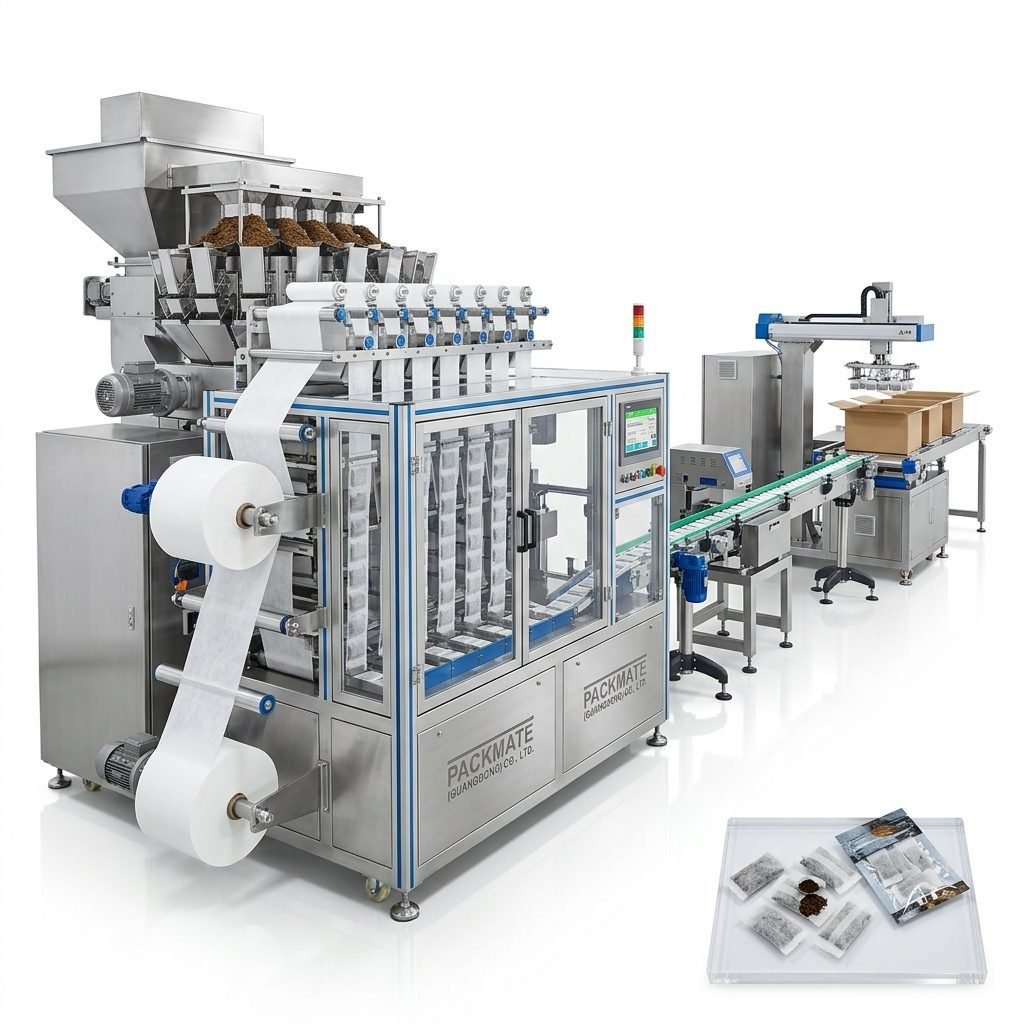
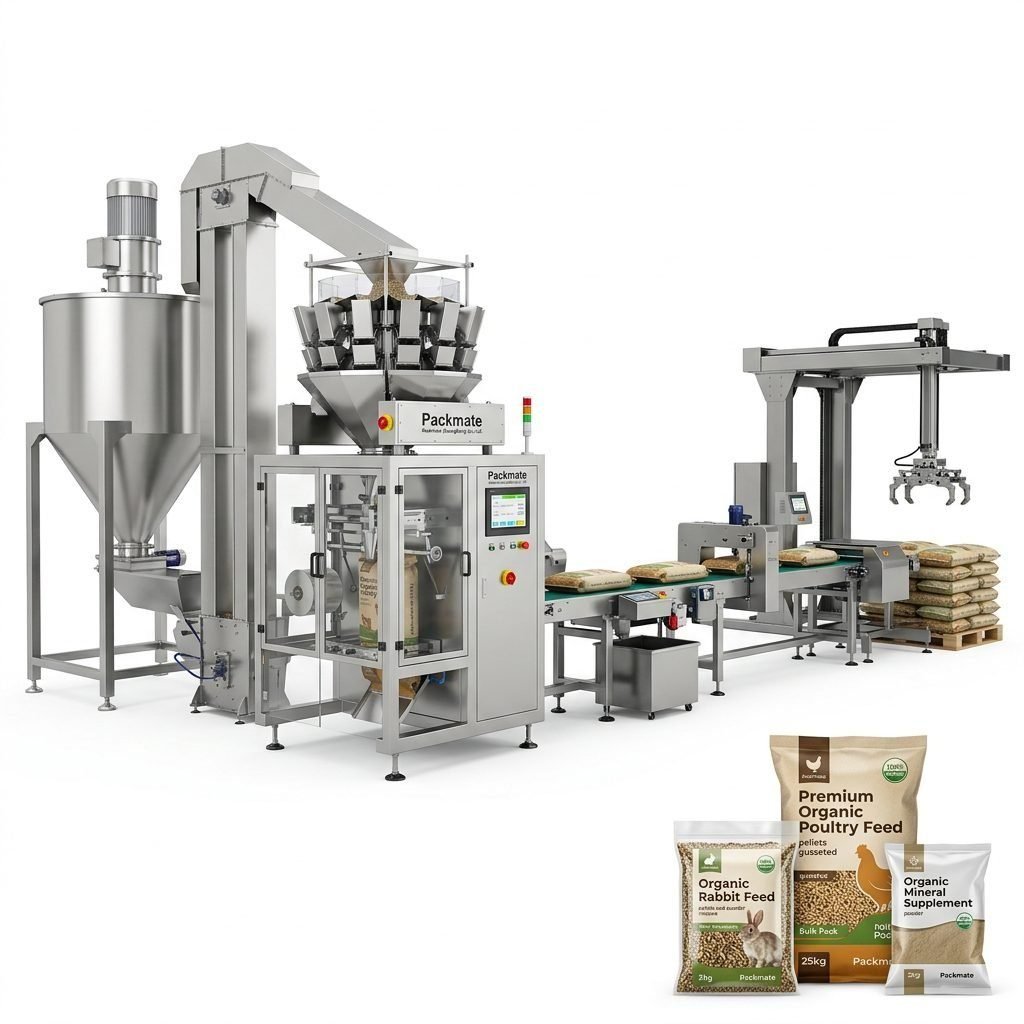
VFFS machines are the most common and versatile choice for dry dog food. They form bags from a single roll of packaging film, fill them with product, and seal them in one continuous, high-speed operation.
Key Features & Benefits:
- High Efficiency: Ideal for large-scale production, capable of speeds from 40 to over 100 bags per minute.
- Reduced Material Cost: Uses cost-effective roll stock film instead of pre-made bags.
- Format Flexibility: Can produce pillow bags, gusseted bags, block-bottom bags, and more with quick changeovers.
- Often integrated with multi-head weighers for unparalleled weighing accuracy.
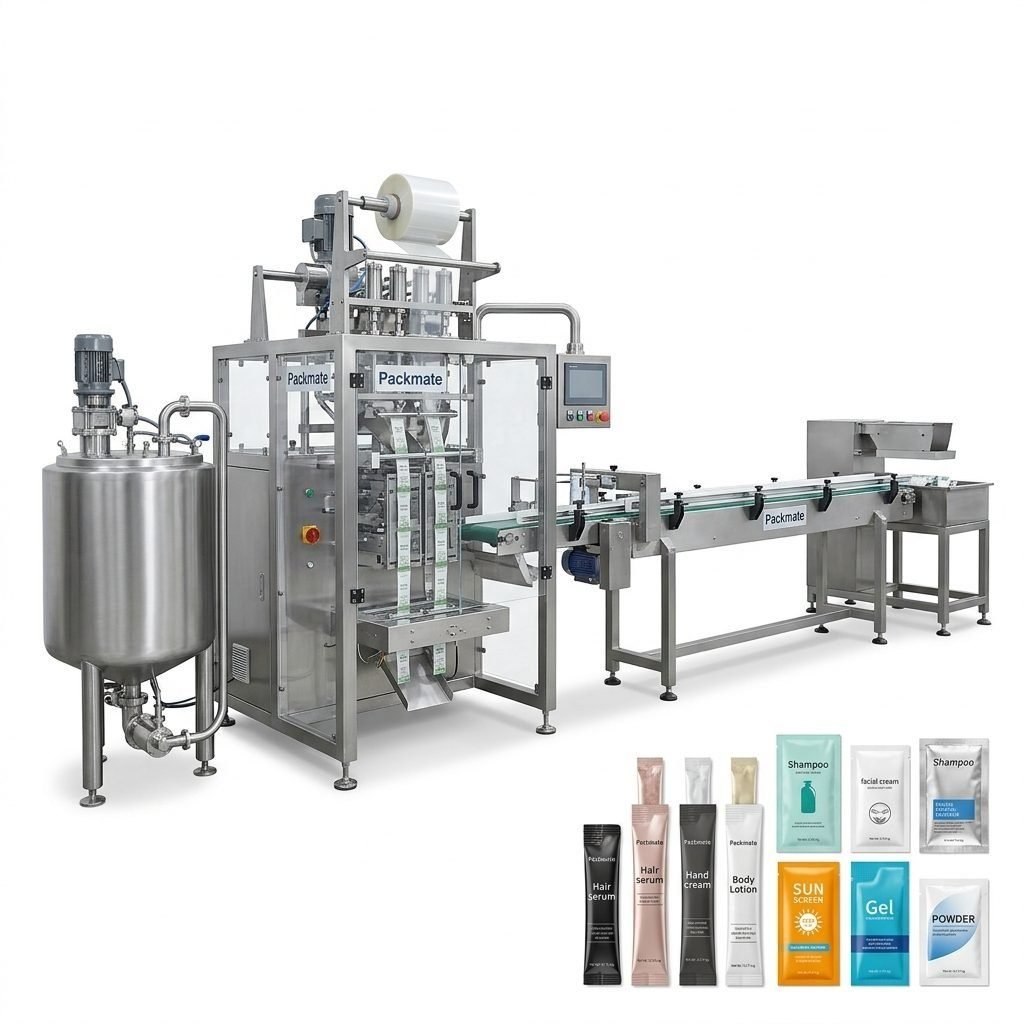
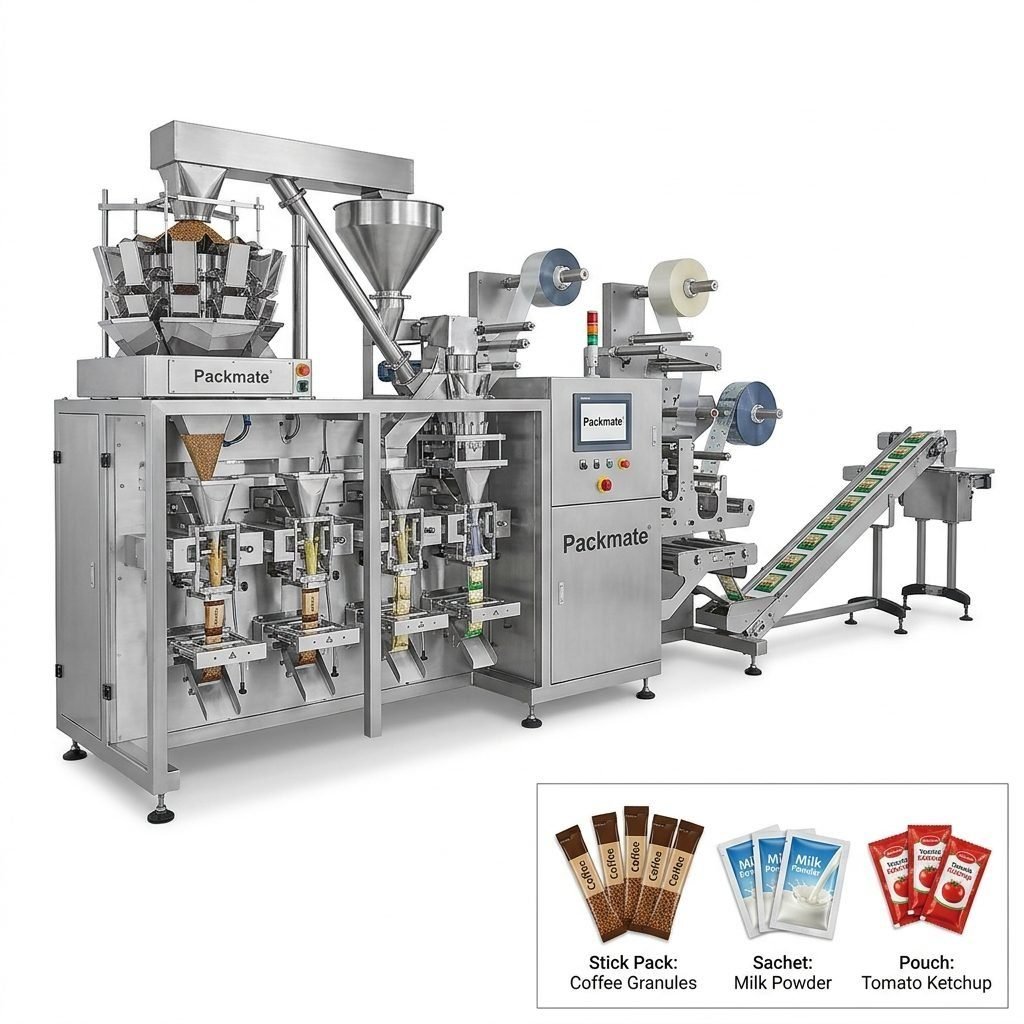
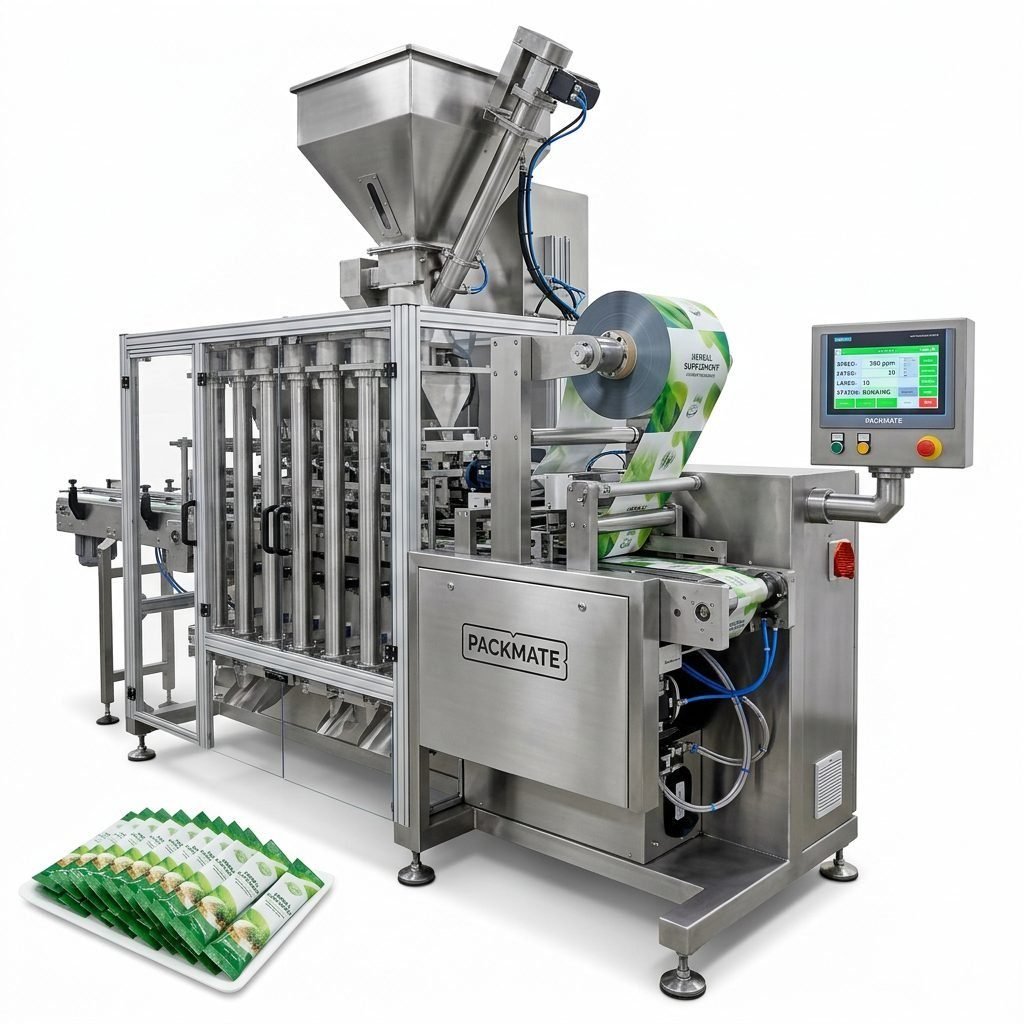
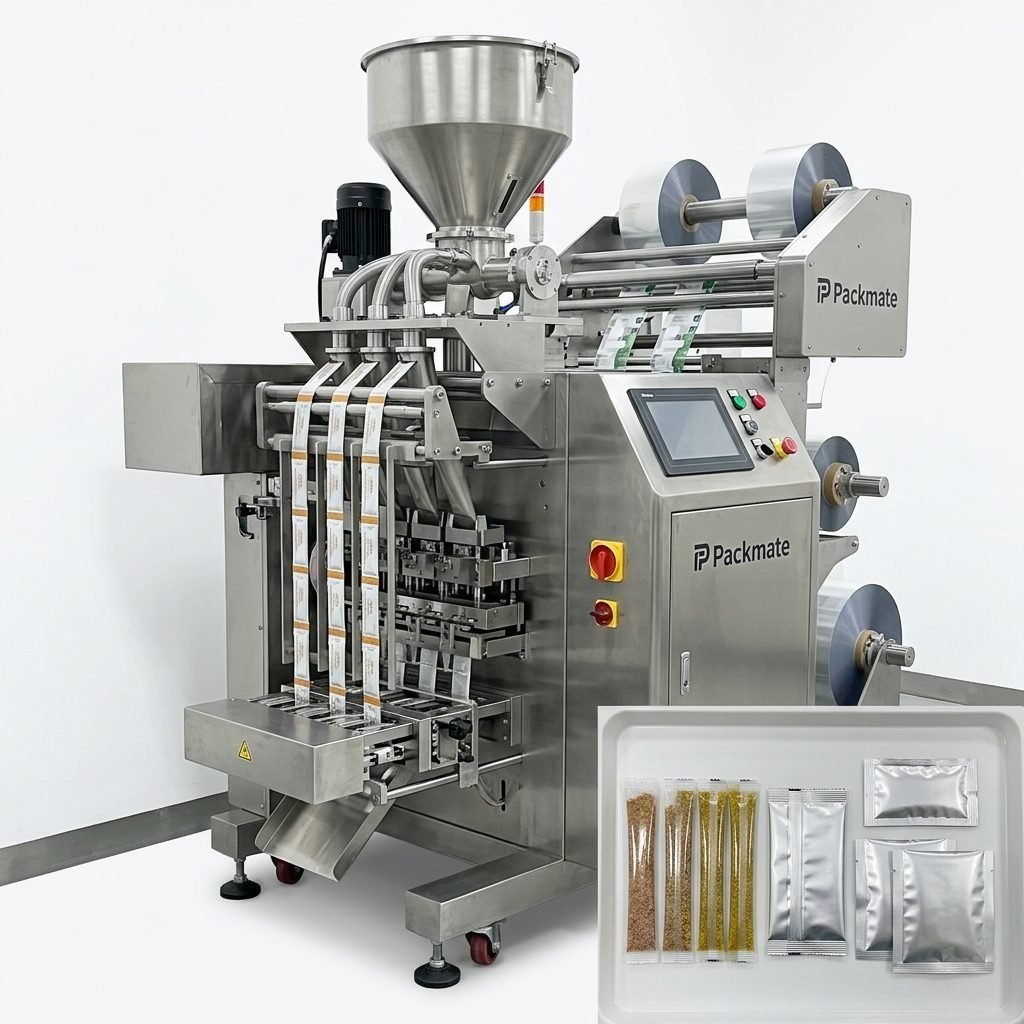
For operations focusing on smaller, portion-controlled packs like treats or supplements, sachet and stick pack machines offer a specialized VFFS solution.
2. Pre-Made Bag Packaging Machines
These machines use already manufactured bags (flat or stand-up pouches). The process involves opening the bag, filling it, and then sealing it. This method is often chosen for its superior bag quality and graphic presentation.
Best For: Premium or niche dog food brands where packaging aesthetics and structural integrity are paramount. It’s suitable for both dry and semi-moist foods. Explore options in bag & pouch packaging machines for this technology.
3. Weighing and Filling Systems
The heart of any dry food packaging line is the weighing system. Accuracy is non-negotiable to avoid give-away (overfilling) and regulatory non-compliance (underfilling).
- Multi-Head Weighers: The gold standard for speed and accuracy. Use 10-24 weighing heads to combine small doses for a perfect total weight. Essential for high-speed VFFS lines.
- Volumetric Cup Fillers: A cost-effective solution for consistent, free-flowing products. Less accurate than weighers but faster for certain applications.
- Auger Fillers: Excellent for powders, fine granules, or mixes with added powder coatings. Provide good accuracy for a wide range of products.
A robust weighing & packaging system is crucial for maintaining product consistency and profitability.
Essential Features & Buying Considerations
Beyond the machine type, evaluate these critical features to ensure the equipment meets your specific needs.
1. Production Speed & Capacity
Match the machine’s output (bags/minute) to your current and projected demand. Consider not just peak speed but sustainable operational speed. A machine from an experienced manufacturer like Packmate, with over 30 years in packaging, is engineered for reliable, long-term performance.
2. Packaging Material Compatibility
The machine must handle your chosen film or laminate. Key factors include:
- Film Structure: Mono-layer or multi-layer barrier films (e.g., PET/AL/PE) for extended shelf life.
- Sealing Method: Hot bar sealing is standard; ensure temperature control is precise for consistent seals.
- Film Thickness & Width: The machine must accommodate your roll stock dimensions.
3. Accuracy and Consistency
Weighing accuracy directly affects your bottom line. Look for machines with high-precision load cells and stable, vibration-resistant frames. Consistent sealing prevents spoilage and customer complaints.
4. Flexibility and Changeover Time
If you produce multiple SKUs (different bag sizes, shapes, or products), quick changeover capability is vital. Look for features like tool-less adjustments, recipe memory in the PLC, and easy-access components.
5. Hygiene and Cleanability
Food-grade design with stainless steel contact parts, smooth surfaces, and easy disassembly for cleaning is mandatory to meet food safety standards (e.g., FDA, EU regulations).
6. Automation and Control Level
Modern machines feature user-friendly touchscreen HMIs (Human-Machine Interfaces) and PLC controls. Advanced options include IoT connectivity for production monitoring, predictive maintenance alerts, and integration with factory MES systems.
7. After-Sales Support and Service
This is perhaps the most critical buying factor. Ensure the supplier offers:
- Comprehensive installation and training.
- Readily available spare parts.
- Responsive technical support (local or remote).
- A clear warranty policy.
Choosing a manufacturer with a strong track record, like Packmate with its dedicated service commitment, mitigates operational risks.
Implementing Your Packaging Line
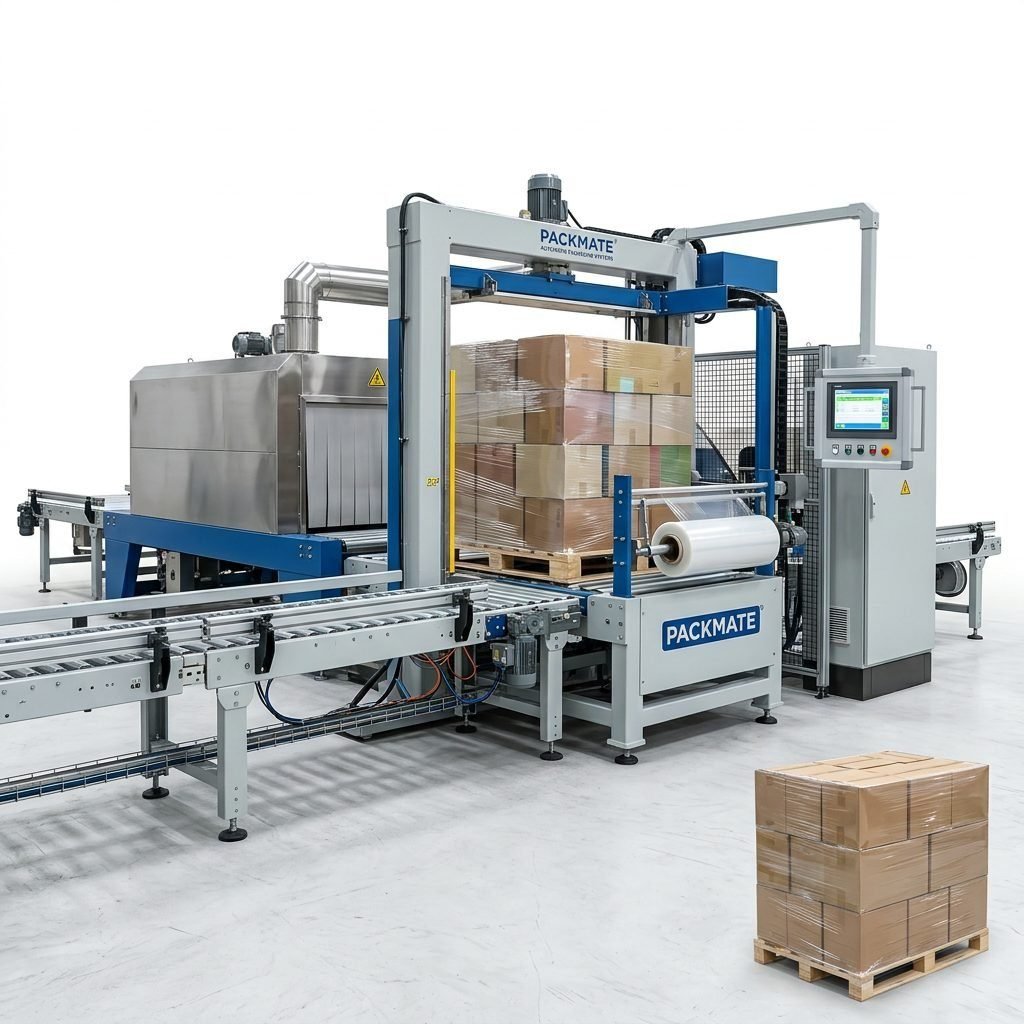
Successfully integrating a new machine involves more than just the purchase. Plan for adequate factory space, utilities (power, compressed air), and operator training. Consider a complete turnkey solution where the supplier designs, installs, and commissions the entire line, including conveyors and ancillary equipment, ensuring all components work harmoniously.
Investing in the right dog food packaging machine is a strategic decision that affects product quality, brand reputation, and profitability. By carefully assessing your needs against machine types, key features, and manufacturer credibility, you can select equipment that delivers efficiency, reliability, and growth for your business.
Frequently Asked Questions (FAQ)
What is the typical lifespan of a dog food packaging machine?
With proper maintenance and operation, a high-quality machine from a reputable manufacturer can last 15 to 20 years or more. Regular servicing, using genuine spare parts, and adhering to operational guidelines are key to maximizing lifespan.
Can one machine handle both dry kibble and wet/gravy dog food?
Generally, no. Dry and wet products require fundamentally different packaging technologies. Dry food uses VFFS or pre-made bag machines with weigh-fill systems. Wet food typically requires liquid filling technology and different sealing methods. Some manufacturers offer modular lines that can be adapted, but they are usually specialized.
How important is the weighing accuracy, and what is an acceptable tolerance?
Weighing accuracy is critical for cost control and legal compliance. Acceptable tolerance varies by region and bag size but is often within ±1% to ±2% of the stated net weight. High-precision multi-head weighers can consistently achieve accuracy within a few grams.
What are the main maintenance requirements for these machines?
Daily cleaning, lubrication of moving parts as per the manual, inspection of seals and heating elements, and calibration of scales are essential. A scheduled preventive maintenance plan from your supplier is highly recommended to prevent unexpected downtime.
How do I choose between a Vertical Form Fill Seal machine and a Pre-Made Bag machine?
Choose VFFS for high-volume, cost-sensitive production where bag design changes are frequent. Choose Pre-Made Bag machines for premium products where bag quality, rigidity (for stand-up pouches), and advanced printing are top priorities, and production volumes are moderate.