In the fast-paced world of food manufacturing, efficiency, shelf life, and product integrity are paramount. Dry foods, encompassing everything from grains and pasta to coffee, spices, and powdered supplements, present unique packaging challenges. Selecting the right dry foods packaging machine is not just an operational decision; it’s a strategic investment that impacts product quality, brand reputation, and your bottom line. This comprehensive guide delves into the types, key features, and significant benefits of these specialized machines, empowering you to make an informed choice for your production line.
Understanding the Different Types of Dry Foods Packaging Machines
The packaging process for dry goods varies significantly based on product form, volume, and desired package style. Here’s a breakdown of the primary machine types:
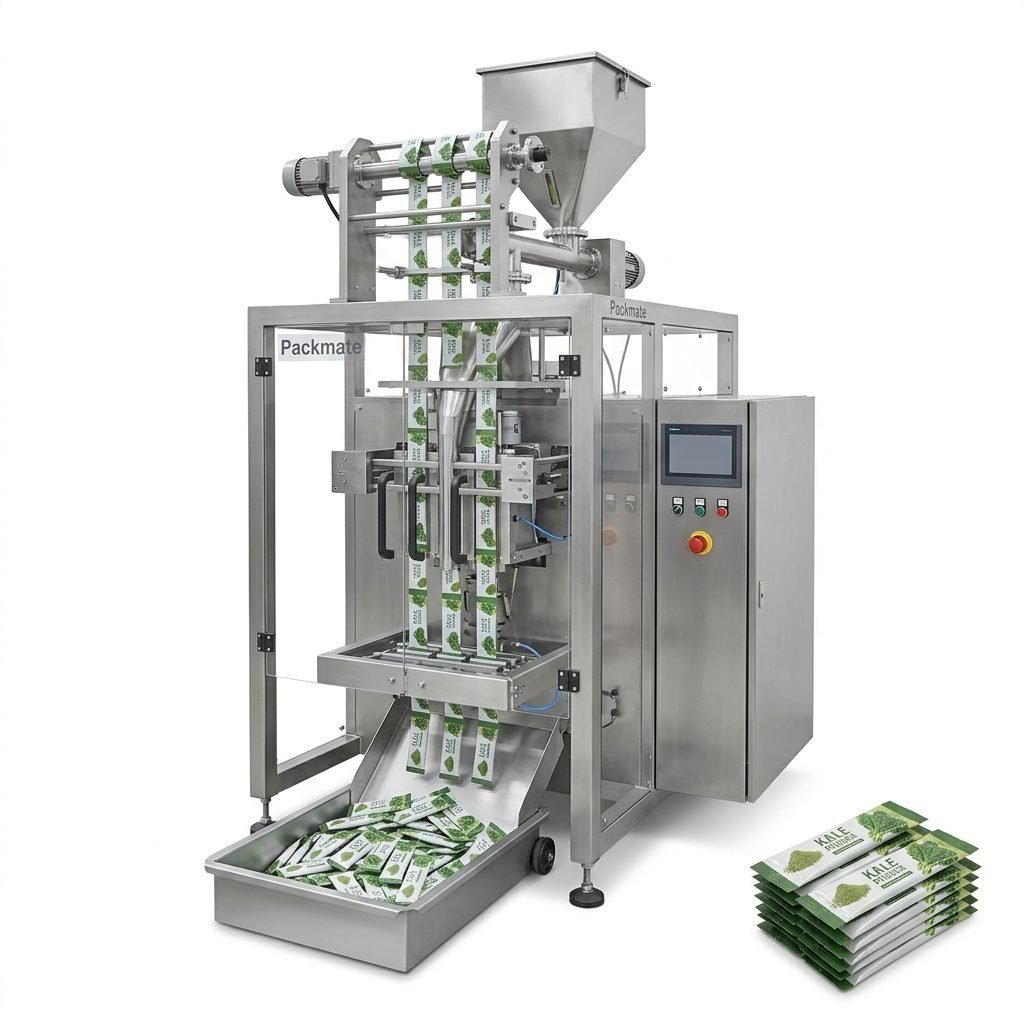
Vertical Form Fill Seal (VFFS) Machines
These are the workhorses of the dry food packaging industry. VFFS machines form bags from a roll of flat packaging film, fill them with a pre-measured amount of product, and then seal them. They are incredibly versatile and can produce a wide range of bag styles, including pillow bags, gusseted bags, and block-bottom bags. Ideal for products like rice, nuts, snacks, and pet food.
Horizontal Form Fill Seal (HFFS) Machines
While less common for granular dry goods, HFFS machines excel at packaging products that are more rigid or require a specific tray presentation. They form the package around the product, often using pre-formed trays or cartons with a lidding film. Suitable for items like crackers, biscuits, or multi-component dry meal kits.
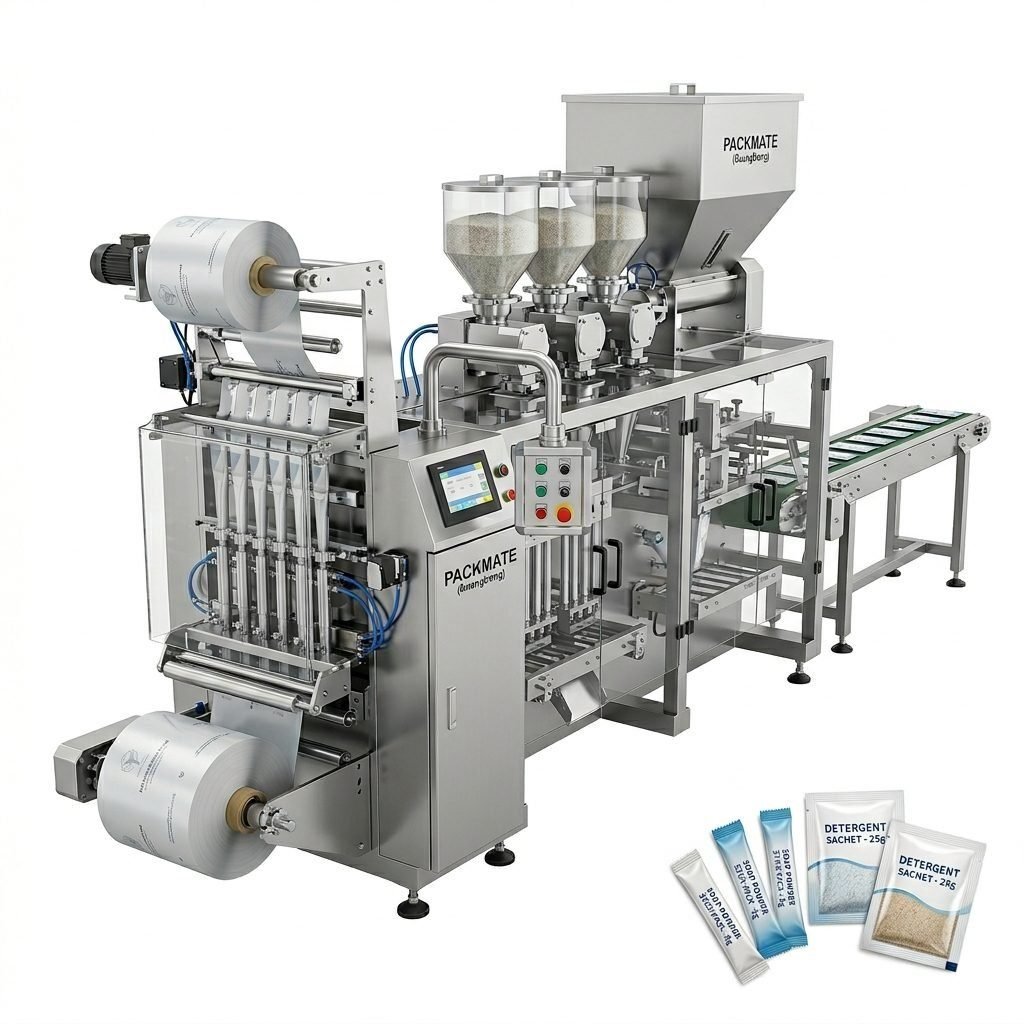
Multi-Lane Stick Pack & Sachet Machines
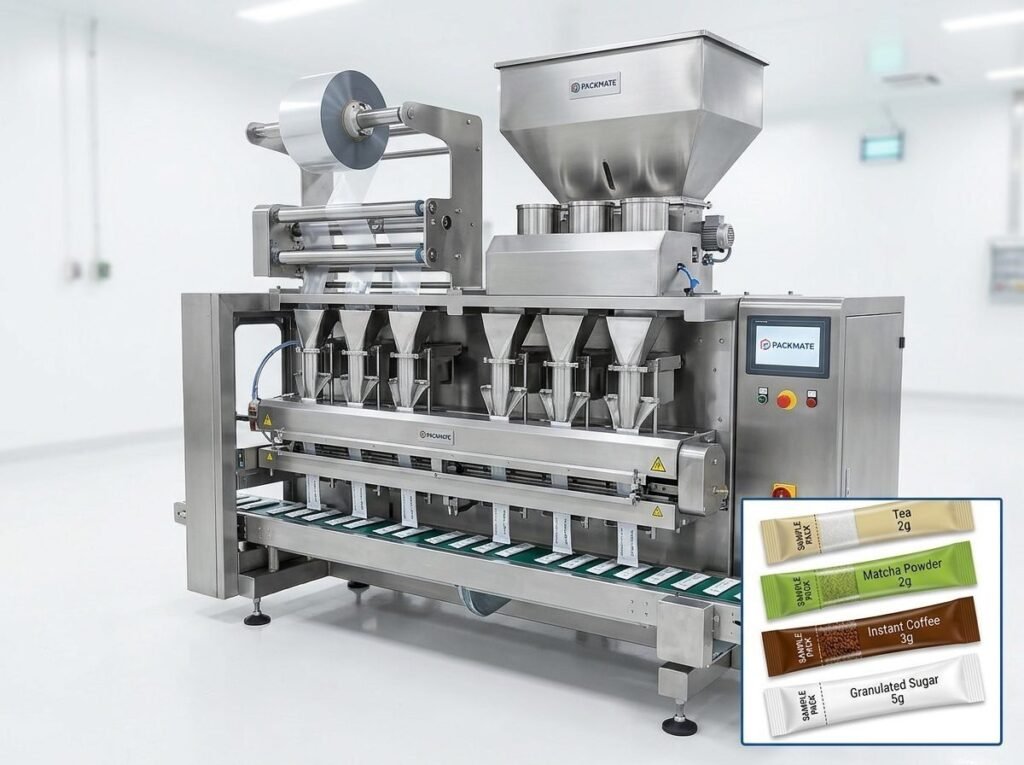
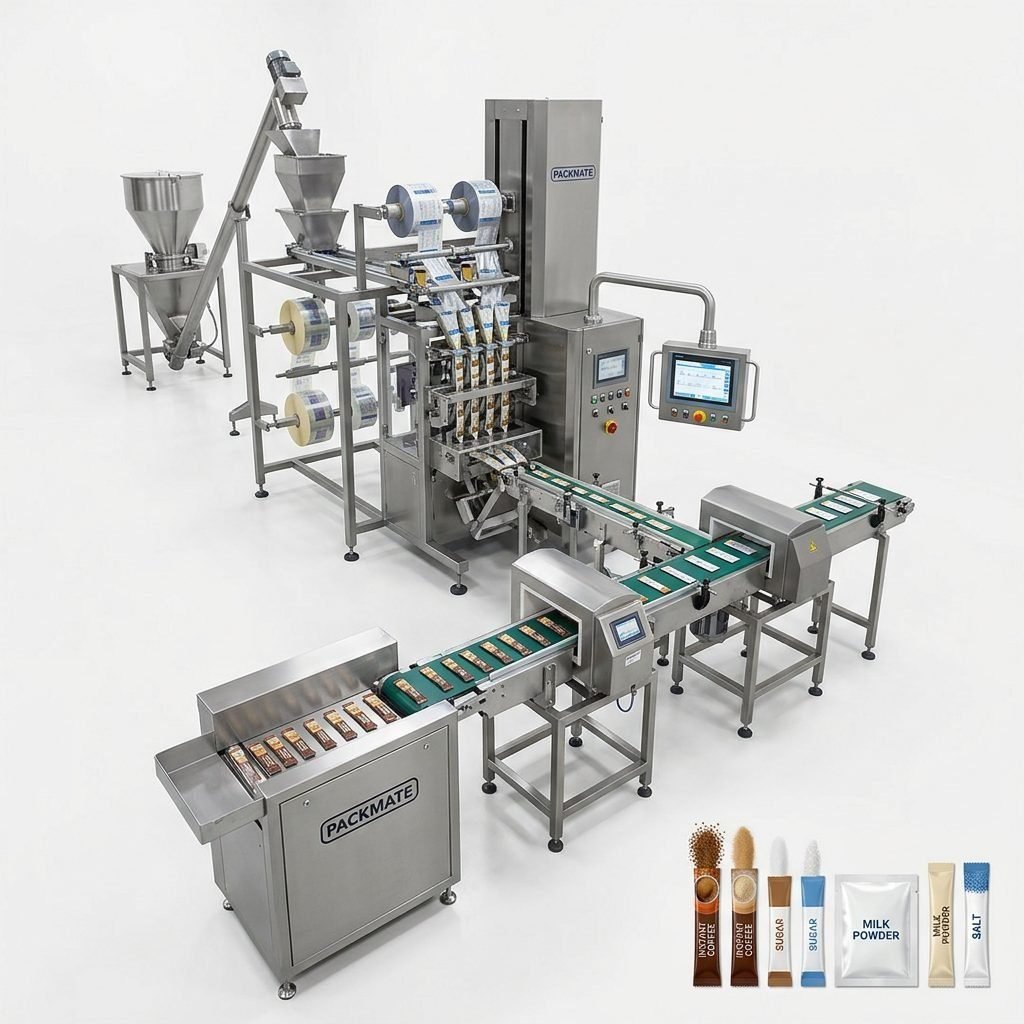
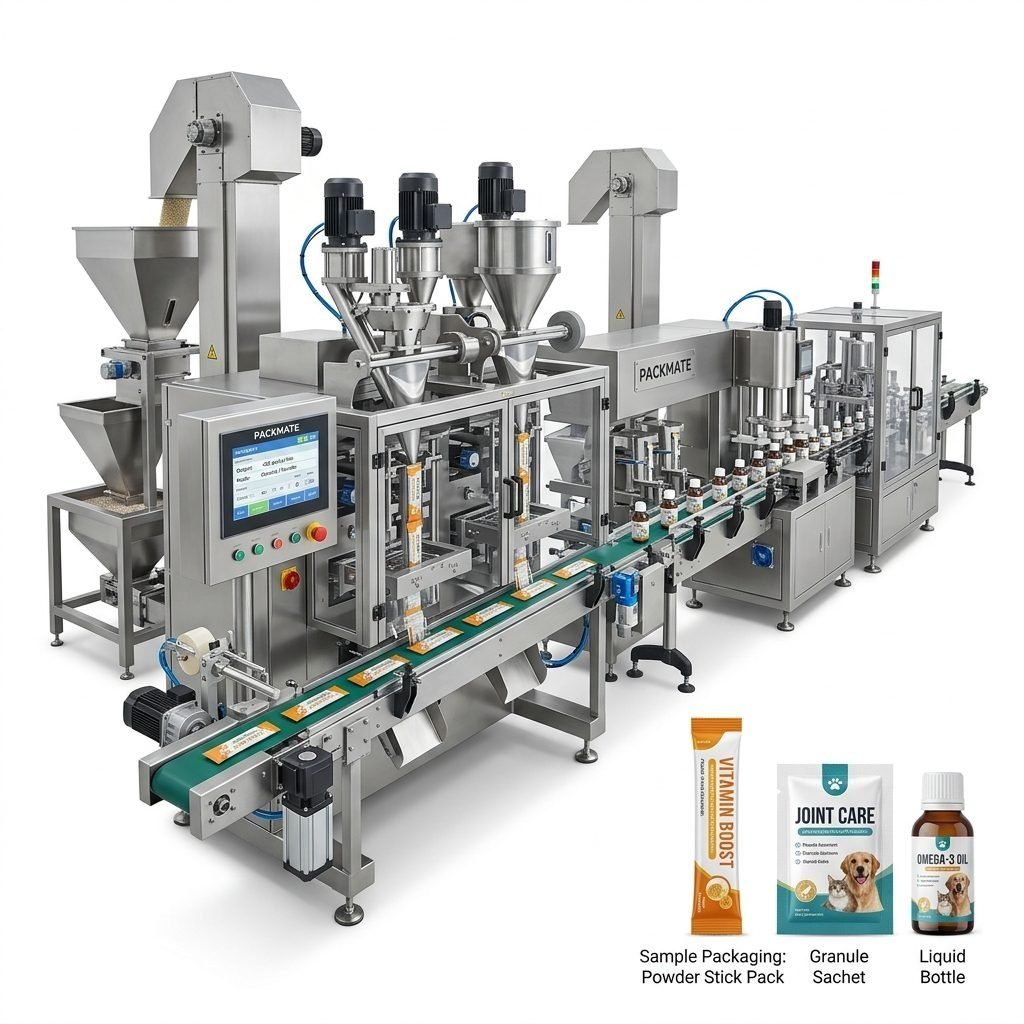
For single-serve portions of powders, granules, or liquids (like drink mixes, sugar, or sauces), these high-speed machines are essential. They operate multiple lanes simultaneously, forming, filling, and sealing small, elongated stick packs or flat sachets. Companies like Packmate Machinery specialize in advanced multi-lane solutions that maximize output for products such as instant coffee, protein powders, and seasoning packets.
Weighing and Dosing Systems
Accuracy is critical in food packaging to ensure compliance and customer satisfaction. Integrated weighing systems, such as multi-head weighers or auger fillers, work in tandem with the packaging machine to deliver precise portions. This is especially important for high-value products like spices, tea, or nutritional supplements.
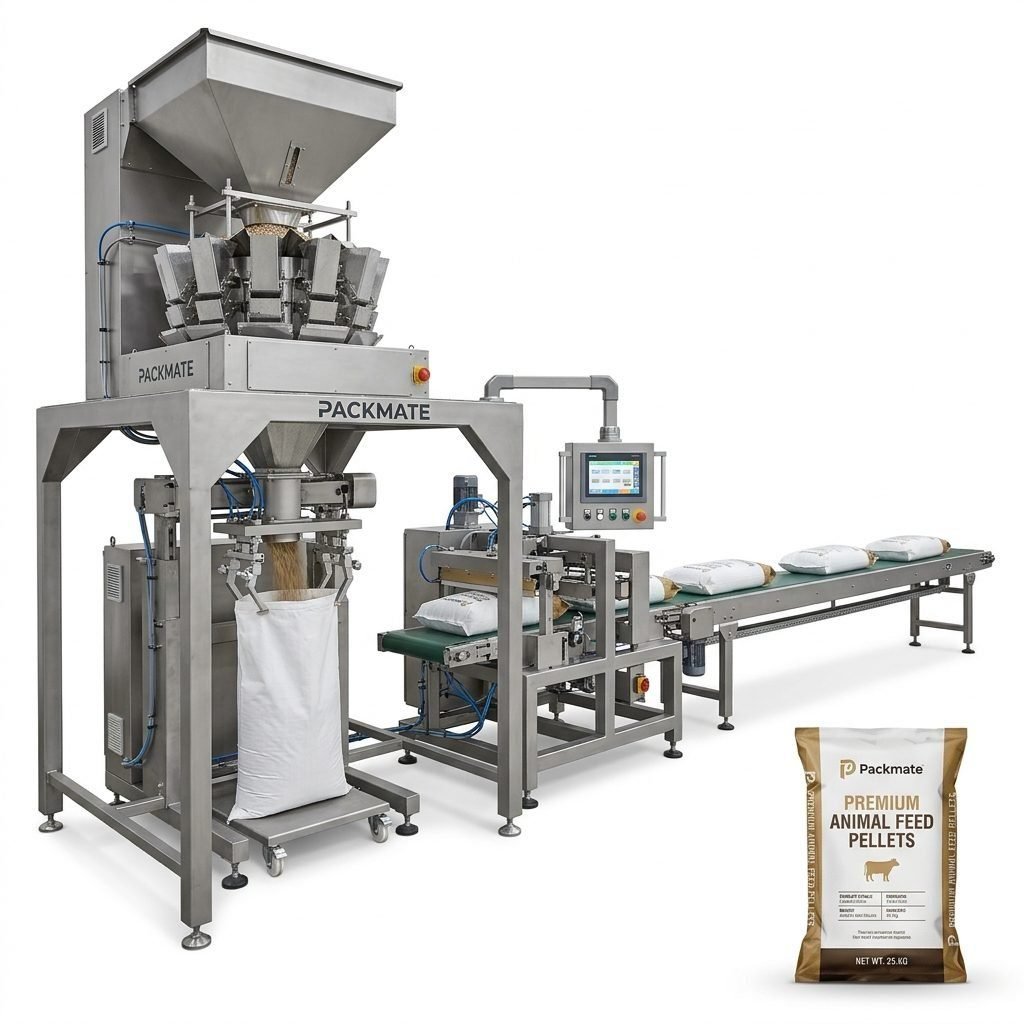
Bulk Bagging Machines
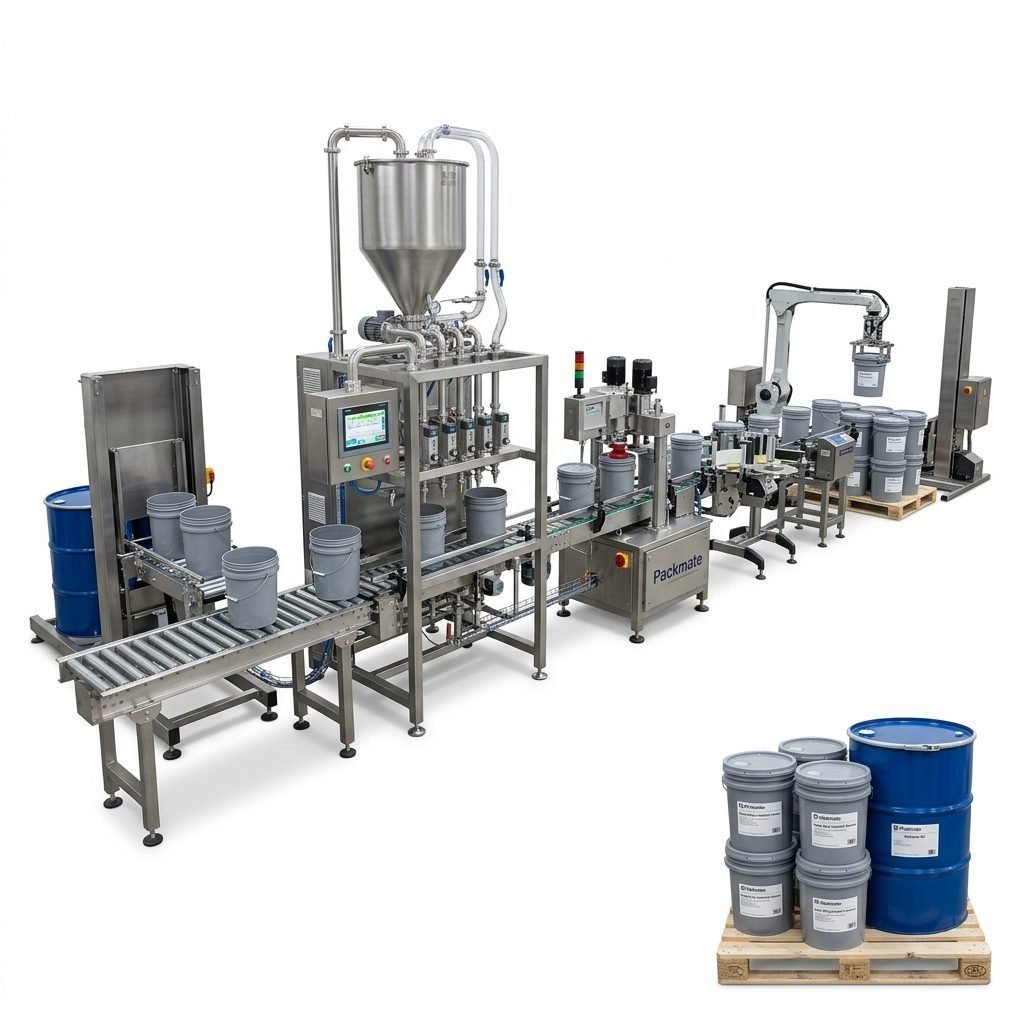
Designed for large-volume distribution, these machines fill and seal big bags (e.g., 10kg, 25kg) of products like flour, sugar, or animal feed. They prioritize durability, speed, and dust containment during the filling process.
Key Takeaway:
The choice between a VFFS, HFFS, or sachet machine depends heavily on your product characteristics (size, flowability, abrasiveness) and your packaging format goals (retail bag, bulk sack, single-serve pouch). Exploring a manufacturer’s full product portfolio can reveal the optimal machine type for your specific application.
Essential Features of Modern Dry Foods Packaging Equipment
Today’s packaging machines are marvels of engineering, incorporating features that boost performance, safety, and ease of use. When evaluating equipment, look for these critical features:
Stainless Steel Construction: For food safety and hygiene, contact parts and frames should be made of food-grade stainless steel. This ensures corrosion resistance, easy cleaning, and compliance with global food safety standards.
Precision Dosing & Filling: Look for machines with high-accuracy auger fillers, cup fillers, or multi-head weighers. Advanced models offer automatic weight feedback systems to minimize giveaway and ensure every package meets the declared weight.
User-Friendly PLC Control System: A programmable logic controller (PLC) with a color touchscreen interface simplifies operation. Operators can easily switch between recipes, monitor production speed, track output, and diagnose issues quickly.
Advanced Sealing Technology: A consistent, hermetic seal is vital to prevent moisture ingress, contamination, and spoilage. Machines should offer precise temperature control for heat sealing and may include options for gas flushing (modified atmosphere packaging) to extend shelf life further.
Quick Changeover Capabilities: In a market demanding variety, the ability to switch between different bag sizes or products rapidly is a huge competitive advantage. Look for machines with tool-less or minimal-tool changeover systems.
Integrated Safety Features: Emergency stop buttons, safety interlocks, and protective guarding are non-negotiable for protecting operators and ensuring a safe working environment.
The Tangible Benefits of Investing in the Right Machine
Upgrading to an automated, high-performance dry foods packaging machine delivers a compelling return on investment across several dimensions:
1. Dramatically Enhanced Productivity & Efficiency
Automation replaces slow, inconsistent manual labor. Modern machines can run 24/7 at high speeds, significantly increasing your output per shift. This allows you to scale production to meet demand without proportionally increasing labor costs.
2. Superior Product Protection & Extended Shelf Life
Precise, airtight seals lock out moisture, oxygen, and contaminants that degrade dry foods. This preserves flavor, texture, and nutritional value, reduces waste, and allows you to confidently expand your distribution reach.
3. Unmatched Consistency & Brand Presentation
Every package is identical—perfectly filled, neatly sealed, and professionally presented. This consistency builds consumer trust and strengthens your brand image on retail shelves. Machines can also easily integrate date coding and batch numbering for traceability.
4. Significant Material & Cost Savings
Advanced machines optimize material usage, reducing film waste. Precise filling minimizes product “giveaway,” saving raw material costs. Furthermore, reduced labor requirements and higher throughput lower your overall cost per unit.
5. Operational Flexibility & Scalability
With quick changeover features, you can produce short runs of different products efficiently. As your business grows, modular machines and complete packaging lines can be expanded or reconfigured to meet new demands, protecting your long-term investment.
Choosing a partner with a strong track record is crucial. A manufacturer like Packmate Machinery, with over two decades of experience, doesn’t just sell a machine; they provide a solution. From their 20,000㎡ modern facility, they offer comprehensive support, from initial consultation and custom engineering to installation, training, and after-sales service, ensuring your packaging operation runs smoothly for years to come.
Frequently Asked Questions (FAQs)
What type of packaging machine is best for powdered products like protein or spice mixes?
For fine powders, a Vertical Form Fill Seal (VFFS) machine equipped with an auger filler is typically the best choice. The auger provides precise, dust-minimized dosing. For single-serve portions, a multi-lane stick pack machine is highly efficient. It’s advisable to request a product test from the manufacturer to ensure the machine handles your specific powder’s flow characteristics perfectly.
How important is the machine’s construction material for food packaging?
Extremely important. Food-grade stainless steel (e.g., 304 or 316 grade) is the industry standard for all product-contact parts. It is non-porous, corrosion-resistant, and easy to sanitize, which is essential for complying with food safety regulations (like FDA, HACCP, or GMP) and preventing contamination.
Can one machine handle different bag sizes and materials?
Yes, most modern machines are designed for quick changeover. By changing the forming tube, sealing jaws, and film roll, operators can switch between different bag sizes and types (e.g., from a flat pillow bag to a gusseted stand-up pouch) often in under 30 minutes. The control system stores settings for each product “recipe.”
What after-sales support should I expect from the manufacturer?
Reputable manufacturers offer comprehensive support, including on-site installation and commissioning, detailed operator training, readily available spare parts, and technical support (often remote via phone or video). Check if they provide service contracts and have a network of local technicians. Reviewing a company’s service commitments before purchase is wise.
How do I determine the right production speed (bags per minute) for my needs?
Calculate your current and projected future daily/weekly output requirements. Factor in your product type, bag size, and desired operational hours. It’s generally recommended to choose a machine with a 15-20% higher capacity than your immediate needs to accommodate growth and peak periods without overworking the equipment.