When considering an investment in a blister packaging machine, understanding the price landscape is crucial for making an informed decision that balances cost with performance and long-term value. The price of these machines is not a single figure but a spectrum influenced by a complex interplay of factors, from automation level and production speed to the specific materials they handle. This comprehensive guide will navigate you through the key cost determinants, provide realistic price ranges, and offer a detailed comparison to help you identify the best value proposition for your packaging line.
Key Factors Influencing Blister Packaging Machine Costs
The final price tag of a blister packaging machine is a sum of its parts and capabilities. Breaking down these factors allows for a clearer cost analysis.
Level of Automation
This is arguably the most significant cost driver. Manual or semi-automatic machines, requiring operator intervention for loading blisters or cards, represent the most affordable entry point. In contrast, fully automatic blister packaging lines integrate feeding, forming, sealing, cooling, and cartoning into one seamless system. While the initial investment is higher, the drastic reduction in labor costs and increase in output speed often deliver a superior return on investment (ROI) for medium to high-volume production.
Production Speed and Output
Machine speed, typically measured in blisters or cycles per minute (CPM), directly correlates with price. A machine rated for 80 cycles per minute will cost substantially less than one capable of 300 cycles per minute. It’s vital to align the machine’s capacity with your current and projected future output needs to avoid overpaying for unused speed or underinvesting in a machine that becomes a bottleneck.
Machine Specifications and Features
Specific technical features add functionality but also cost. Consider the forming method (thermoforming vs. cold forming), the number of sealing stations, the type of sealing (radio frequency, heat, or ultrasonic), and compatibility with different blister materials (PVC, PVDC, Aclar, aluminum). Advanced features like integrated vision inspection systems, automatic reject mechanisms, or quick-changeover tooling for different blister sizes enhance quality and flexibility but increase the initial investment.
Material Compatibility: A Hidden Cost Factor
Not all machines handle all materials. A standard thermoforming machine for PVC may be less expensive, but if your product requires high-barrier materials like Aclar or complex cold-formed aluminum blisters for ultra-sensitive pharmaceuticals, the required machinery is significantly more specialized and costly. Always verify material compatibility with potential suppliers like Packmate’s packaging machine range to avoid unexpected expenses.
Blister Packaging Machine Price Ranges: A Breakdown
Prices can vary widely based on the factors above. Here is a general guide to set expectations (note: these are approximate ranges and can fluctuate based on brand, region, and specific configurations).
Entry-Level / Semi-Automatic Machines
Price Range: $15,000 – $50,000
Ideal for startups, small-scale producers, or low-volume production runs. These machines often require manual loading of products and blisters but automate the sealing and cutting process. They offer a low-cost way to achieve professional blister packaging with moderate output.
Mid-Range / Standard Automatic Machines
Price Range: $50,000 – $150,000
This is the most common range for robust, fully automatic blister packers suitable for medium-volume production. Machines in this bracket typically offer speeds from 100 to 250 CPM, include basic automated feeding systems, and provide reliable, consistent sealing. They form the workhorse of many pharmaceutical and consumer goods packaging lines. Exploring options from established manufacturers with a strong track record, such as those detailed in Packmate’s company profile, is advisable.
High-End / Advanced Integrated Lines
Price Range: $150,000 – $500,000+
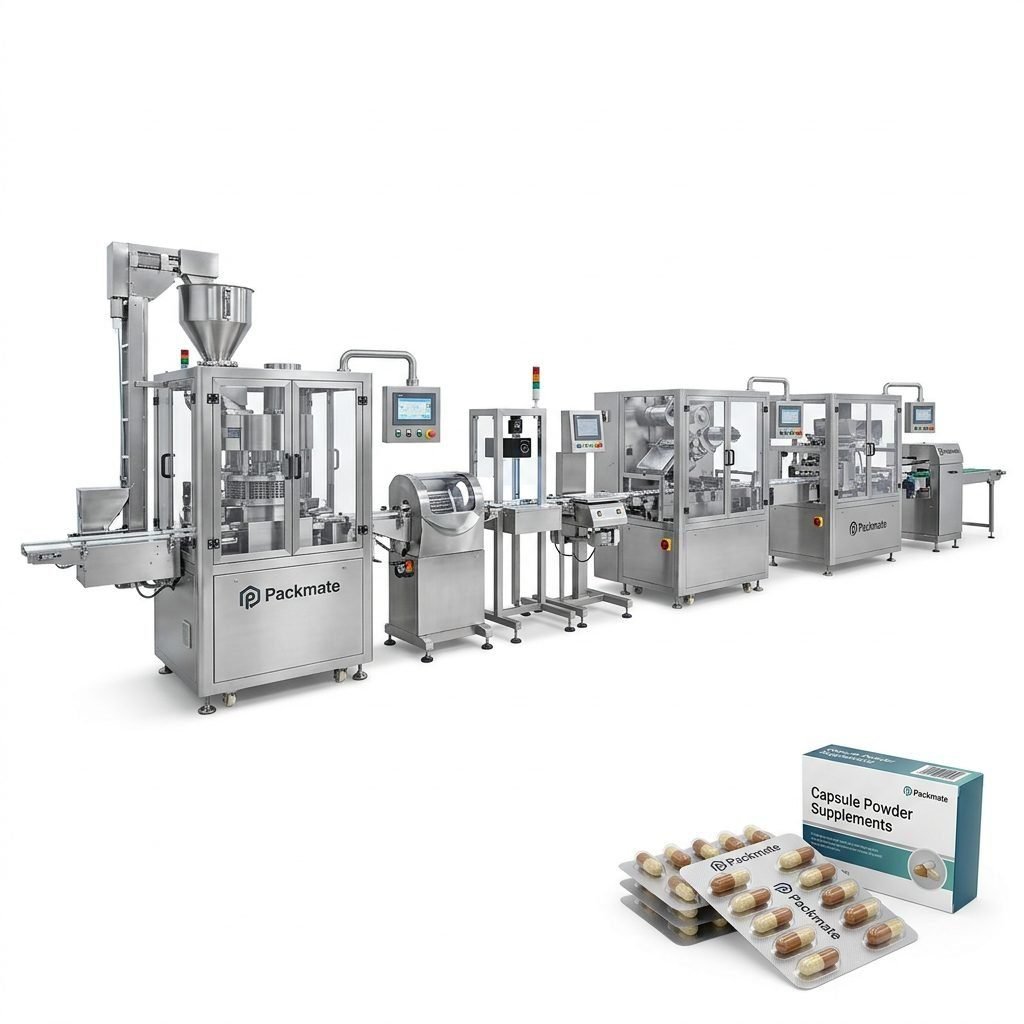
At this level, you are investing in a complete turnkey solution. This includes high-speed blister machines (300+ CPM) integrated with automatic cartoners, vision inspection systems, batch coding, and sometimes even robotic palletizing. These lines are designed for large-scale, 24/7 production with minimal downtime and maximum efficiency, often featuring advanced Industry 4.0 connectivity for data monitoring.
Cost Comparison: New vs. Used vs. Leasing
Beyond the machine type, your acquisition model significantly impacts cash flow and total cost of ownership.
Purchasing New Equipment
Pros: Full warranty, latest technology, energy efficiency, compliance with current safety standards, and manufacturer support (like Packmate’s service programs). It’s a long-term asset.
Cons: Highest upfront capital expenditure. Requires significant budget allocation.
Purchasing Used/Refurbished Equipment
Pros: Lower initial purchase price (often 30-60% less than new). Faster availability.
Cons: Potential for hidden wear and tear, outdated technology, limited or no warranty, higher risk of unscheduled downtime, and possible higher maintenance costs. Spare parts for older models may be difficult to source.
Leasing or Financing
Pros: Preserves working capital. Allows access to newer technology. Payments are often tax-deductible as an operating expense. Flexible upgrade paths at the end of the lease term.
Cons: Higher total cost over the long run compared to an outright purchase. You do not own the asset at the end of the lease unless a buyout option is exercised.
Beyond the Sticker Price: Total Cost of Ownership (TCO)
The smartest financial analysis looks beyond the purchase price. The Total Cost of Ownership (TCO) includes all expenses over the machine’s operational life:
- Installation & Training: Costs for factory commissioning and operator training.
- Energy Consumption: Newer, more efficient machines can save thousands annually on electricity.
- Maintenance & Spare Parts: Regular preventive maintenance and the cost of wear parts (heaters, seals, cutting dies).
- Material Waste & Yield: A machine with precise sealing and cutting minimizes material waste (film and foil), directly saving on consumable costs.
- Downtime: Unplanned stoppages are incredibly costly. A reliable machine from a reputable manufacturer minimizes this risk.
Investing in a slightly more expensive but highly reliable machine from a company with a proven history, like Packmate Machinery with over 22 years of development, often results in a lower TCO than a cheaper, less reliable alternative.
How to Get an Accurate Quote and Maximize Value
To move from price ranges to a firm quote, be prepared to provide detailed information to suppliers:
- Product Details: Size, shape, and fragility of the item to be packaged.
- Blister Specifications: Desired material (PVC, PET, etc.), cavity size, and foil type.
- Required Output: Blisters per minute, shifts per day, and days per week of operation.
- Factory Conditions: Available floor space, power supply, and compressed air.
When evaluating quotes, prioritize value over the lowest bid. Assess the supplier’s reputation, availability of technical support, spare parts inventory, and training offerings. A partner who ensures your line runs smoothly is worth the investment.
Frequently Asked Questions (FAQs)
What is the typical payback period for a blister packaging machine?
The payback period varies dramatically based on volume, labor savings, and reduced waste. For a business replacing manual packing or outsourcing, an automatic machine can often pay for itself in 12 to 36 months through increased productivity and lower per-unit costs.
Can one machine handle different blister sizes?
Yes, but it requires a changeover. Many machines offer quick-change tooling kits for different forming and cutting dies. The time and complexity of this changeover (from 30 minutes to a few hours) is a key feature to discuss with your supplier, especially if you have multiple products.
Are there significant ongoing costs besides maintenance?
Yes. The primary ongoing costs are the consumables: the blister film (web) and the lidding foil. Their quality directly affects machine performance and seal integrity. Energy costs for heating plates and motors are another recurring expense.
How important is after-sales service when choosing a supplier?
Extremely important. Service is not an add-on; it’s a critical part of the investment. Ensure your supplier, whether domestic or international like Packmate, offers accessible technical support, readily available spare parts, and comprehensive training. Good service maximizes uptime and extends the machine’s lifespan.
Where can I see examples of blister packaging solutions in action?
Reviewing real-world applications can provide valuable insights. Many manufacturers showcase their equipment’s capabilities through case studies. You can explore practical implementations and solutions on pages like Packmate’s case study portfolio.