When selecting a bottle filling and packaging machine, buyers face a critical decision that impacts production efficiency, product quality, and overall business profitability. This guide provides a comprehensive overview to help you navigate the key considerations, from understanding different machine types to evaluating manufacturers and planning for future needs.
Understanding Bottle Filling Technologies
The core of any packaging line is the filling technology. The choice depends heavily on your product’s viscosity and characteristics.
Gravity Fillers are ideal for free-flowing, thin liquids like water, juices, or solvents. They are simple, cost-effective, and easy to clean. Product flows from a tank into bottles by gravity, with volume controlled by timing or level sensors.
Piston Fillers offer high accuracy for a wide range of products, from creams and pastes to sauces and oils. A piston draws a precise volume of product from a hopper and dispenses it into the container. They are excellent for viscous products and products containing particulates.
Pump Fillers use rotary pumps, peristaltic pumps, or gear pumps to transfer product. They are versatile and suitable for foamy liquids, abrasive slurries, or shear-sensitive products. Pump selection is crucial to maintain product integrity.
Volumetric Cup Fillers are common for dry or semi-solid products like powders, granules, or seeds. Pre-measured cups dip into a product bed, fill, and then discharge into containers. They provide good speed and consistent volume.
Net Weight Fillers represent the pinnacle of accuracy, especially for high-value products. Each container is weighed on a scale during filling, and the filler stops when the target weight is reached. While slower and more expensive, they eliminate errors due to product density variations.
Key Components of a Complete Packaging Line
A fully automated line integrates several machines for a seamless operation. Beyond the filler, critical components include:
- Bottle Unscrambler: Oriients and feeds empty bottles from bulk bins onto the conveyor.
- Capping Machine: Applies screw caps, snap-on lids, or press-on closures with consistent torque.
- Labeling Machine: Applies front, back, or wrap-around labels accurately. Options include pressure-sensitive (labeler) or glue-based systems.
- Induction Sealer: For plastic containers with foil liners, this machine uses electromagnetic induction to create an airtight hermetic seal, crucial for product freshness.
- Conveyor System: The backbone that transports containers between stations. Modular conveyors allow for line layout customization.
Critical Factors for Buyers to Evaluate
Making an informed purchase requires looking beyond the basic specifications. Consider these essential factors:
Production Speed & Output
Calculate your required output in bottles per minute (BPM) or per hour. Consider both current needs and projected growth. Do not over-specify for a far-future capacity if it drastically increases upfront cost, but ensure the machine can handle a reasonable increase with minor modifications.
Container Versatility & Changeover
How often will you change bottle sizes or shapes? Quick-Changeover (QCO) features, like adjustable guides, tool-less parts swaps, and saved PLC recipes, can reduce downtime from hours to minutes, significantly boosting overall equipment effectiveness (OEE).
Hygiene and Construction: For food, pharmaceutical, or cosmetic products, sanitary design is non-negotiable. Look for machines with stainless steel (304 or 316 grade) contact parts, polished surfaces, easy access for cleaning, and compliance with relevant standards (e.g., FDA, GMP, EHEDG).
Accuracy and Waste Reduction: Even a small overfill or underfill adds up to massive product giveaway or customer complaints over time. Evaluate the filler’s claimed accuracy (±0.5% to ±1% is common for liquids) and ask for demonstration data with your actual product.
Automation and Control Level: Modern machines feature Programmable Logic Controllers (PLCs) and Human-Machine Interfaces (HMIs) with touchscreens. These allow for recipe storage, production data tracking, diagnostic alerts, and integration with factory monitoring systems (SCADA/MES).
The Importance of Manufacturer Selection
Your machine supplier is a long-term partner. A reputable manufacturer like Packmate Machinery brings invaluable expertise. With over 30 years in designing intelligent packaging equipment, their experience translates into reliable, well-engineered solutions. Evaluate a supplier’s:
- Industry Experience & References: Ask for case studies or contact existing clients who run similar products.
- Technical Support & Service: Availability of spare parts, remote support, and on-site service engineers is critical for minimizing downtime.
- Testing Capabilities: Can you send your product for a live factory test? A successful test run de-risks the purchase.
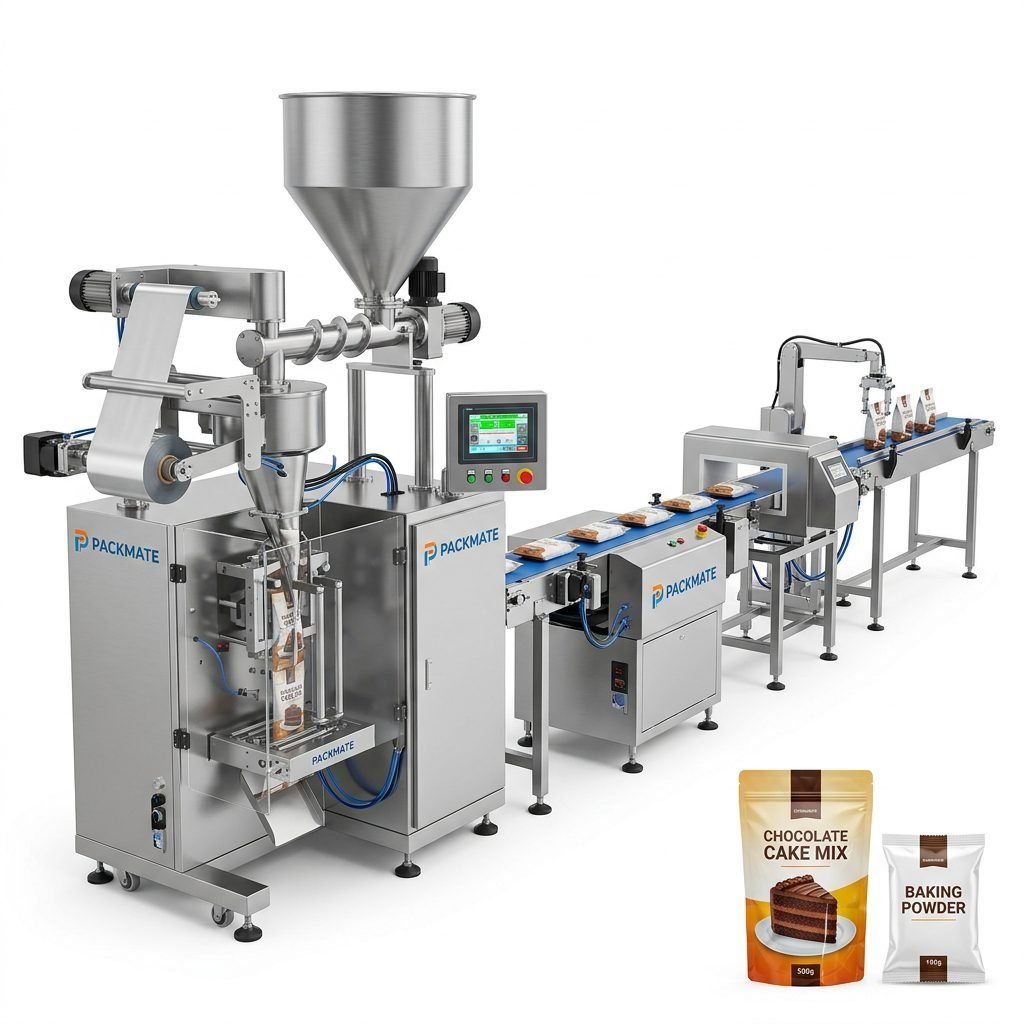
- Scope of Supply: Do they offer a single machine or a complete integrated packaging line? A turnkey solution from one vendor simplifies project management and ensures compatibility.
Planning for Integration and Future-Proofing
Think of your new machine as part of a larger system. Ensure your factory floor has adequate space, utilities (power, compressed air, possibly vacuum), and access for installation. Discuss integration with upstream (e.g., mixing tanks) and downstream (e.g., case packing) equipment with your supplier.
Future-proofing involves considering scalability. Can the line’s speed be increased later? Can it accommodate new container types? Choosing a modular design and a supplier with a broad portfolio, including various auxiliary packaging equipment, provides flexibility for expansion.
Total Cost of Ownership (TCO) Analysis
Look beyond the initial purchase price (CAPEX). A cheaper machine may have higher operating costs (OPEX). A comprehensive TCO analysis includes:
Energy Consumption: Efficient drives and pneumatics can reduce electricity costs.
Maintenance Costs: Predictable maintenance schedules and affordable, readily available spare parts.
Product Waste: A more accurate filler pays for itself by reducing giveaway.
Labor Costs: Higher automation reduces the number of operators required per line.
Downtime Cost: A reliable machine from a supportive supplier minimizes costly production stoppages.
Frequently Asked Questions (FAQs)
Q1: What is the typical lead time for a bottle filling and packaging machine?
A: Lead times vary significantly based on complexity and customization. For standard models, it can range from 12 to 20 weeks. For fully custom, integrated lines, it may take 20 to 30 weeks or more. Always confirm timelines with your supplier during the quotation process.
Q2: How do I ensure the machine meets sanitary requirements for my food product?
A: Specify the required sanitary standards (e.g., FDA CFR 21, EU 1935/2004) upfront. The machine should be constructed with appropriate food-grade stainless steel, have smooth, crevice-free surfaces, and be designed for wet cleaning (CIP/SIP where applicable). Request material certifications for all product-contact parts.
Q3: Can one machine handle different bottle sizes and products?
A: Yes, many machines are designed for versatility. The key is the changeover process. Machines with “quick changeover” features allow you to switch formats in 15-30 minutes by changing parts like filling nozzles, bottle guides, and capping heads. The control system should store recipes for each product/bottle combination.
Q4: What kind of after-sales support should I expect?
A: Comprehensive support includes detailed installation documentation, on-site or remote training for your operators and maintenance staff, a warranty period (typically 12 months), access to technical manuals and spare parts lists, and availability of service engineers for troubleshooting. Clarify response times for support requests.
Q5: Is it better to buy individual machines or a complete integrated line from one supplier?
A: For new lines or major upgrades, a complete integrated line from a single supplier like Packmate is often advantageous. It ensures mechanical and control compatibility, provides a single point of responsibility for performance and service, and streamlines project management. For adding a single machine to an existing line, a standalone unit may suffice if interface requirements are clear.