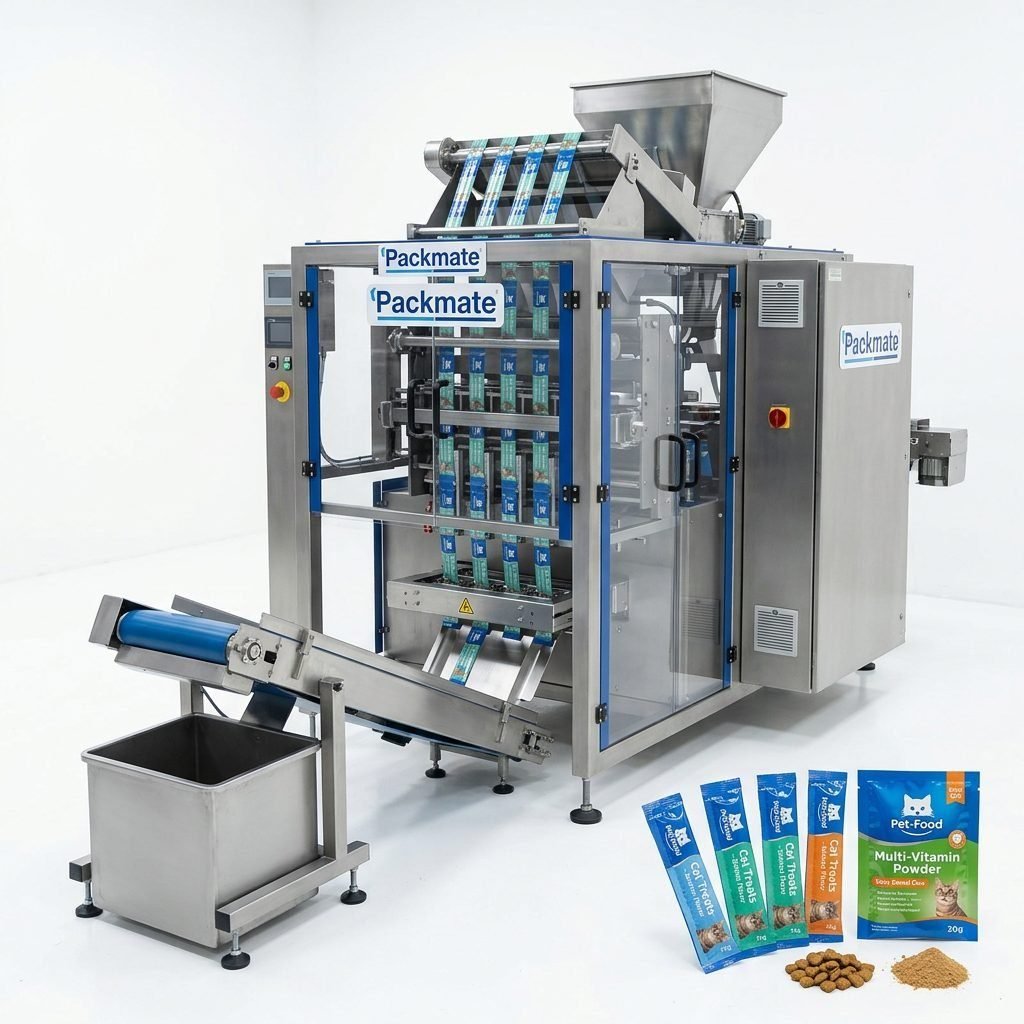
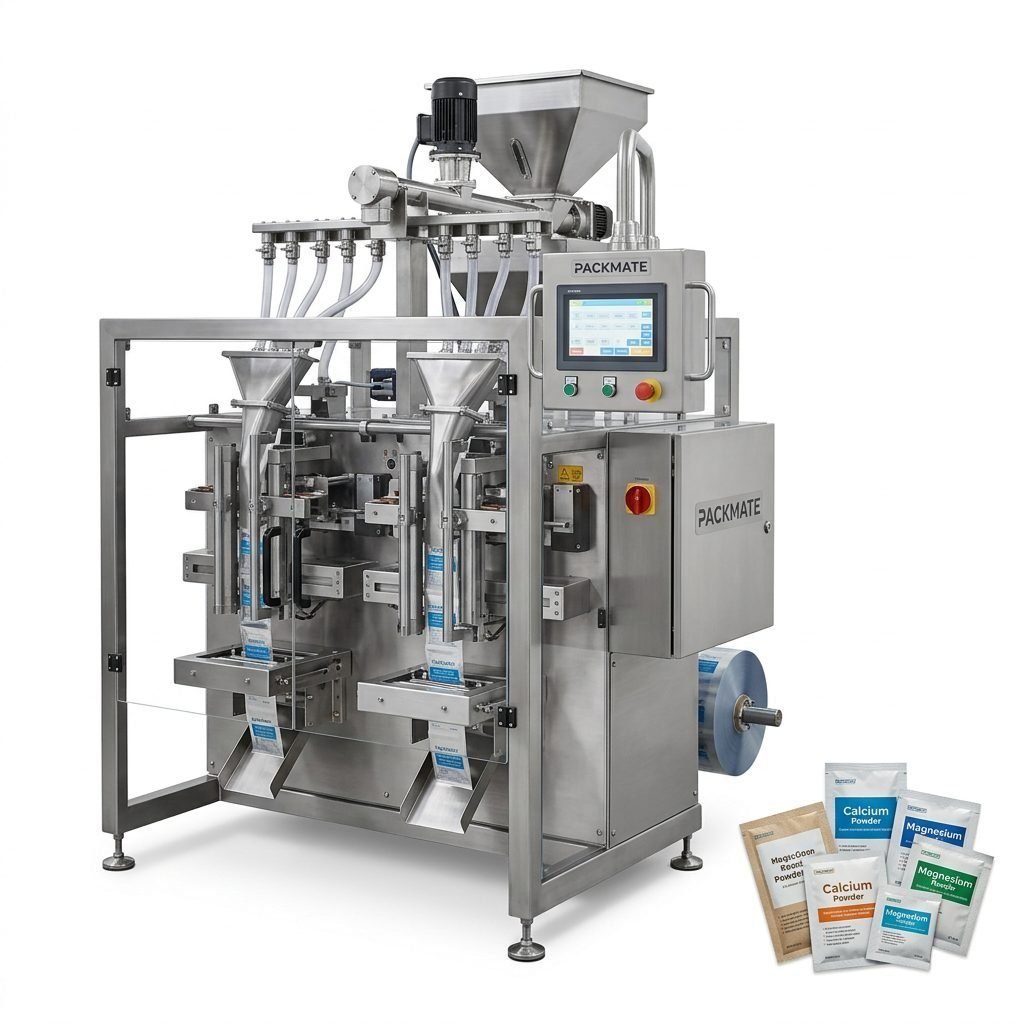
In today’s fast-paced manufacturing landscape, efficiency is not just a goal—it’s a necessity for survival and growth. Custom packaging machinery stands at the forefront of this drive, offering tailored solutions that streamline production, reduce waste, and enhance product consistency. For industries ranging from food and pharmaceuticals to health supplements, the right packaging equipment can transform operational workflows, turning potential bottlenecks into seamless processes.
The Core Value of Customization in Packaging
Off-the-shelf packaging machines serve a general purpose, but they often fall short when faced with unique product specifications, varying material properties, or specific production volume requirements. Custom packaging machinery is engineered to fit your exact needs, whether you’re handling delicate powders, viscous liquids, or irregular granules. This bespoke approach ensures that every aspect of the machine—from the feeding system and weighing mechanism to the sealing technology—is optimized for your product, leading to significant gains in speed and accuracy.
The benefits are tangible. A custom solution minimizes product giveaway by achieving precise fills, directly impacting your bottom line. It reduces downtime caused by machine-product incompatibility and lowers the risk of contamination through closed, product-specific systems. For businesses looking to scale, a custom-designed line can be modular, allowing for future expansion without the need for a complete system overhaul.
Key Industries Driving Demand
The push for sophisticated packaging is particularly strong in sectors where precision, hygiene, and presentation are paramount.
- Food & Beverage: From single-serve condiment sachets to stick packs for instant coffee, custom machines handle diverse consistencies and ensure freshness.
- Pharmaceuticals: Accuracy in dosing is critical. Custom machinery provides the sterile environment and exact measurement required for powders and tablets.
- Health & Nutraceuticals: This growing market relies on attractive, reliable packaging for powders, liquids, and capsules, often requiring nitrogen flushing for preservation.
Companies like Packmate Machinery have built their expertise by serving these exacting industries, developing over 50 machine models to meet specialized demands.
Components of an Efficient Custom Packaging Line
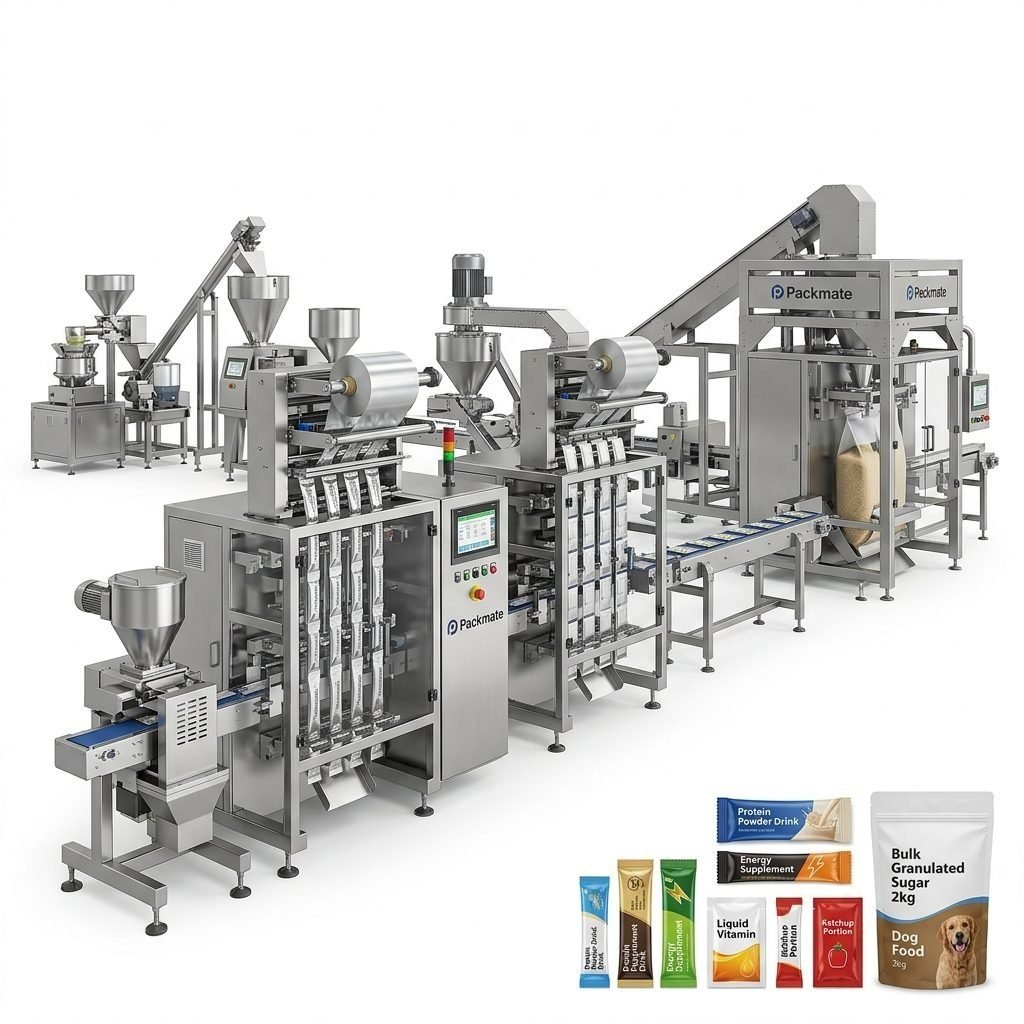
Building an efficient production line is more than just linking machines together. It involves the intelligent integration of several key components, each customized to play its part in a harmonious system.
1. Intelligent Feeding & Weighing Systems
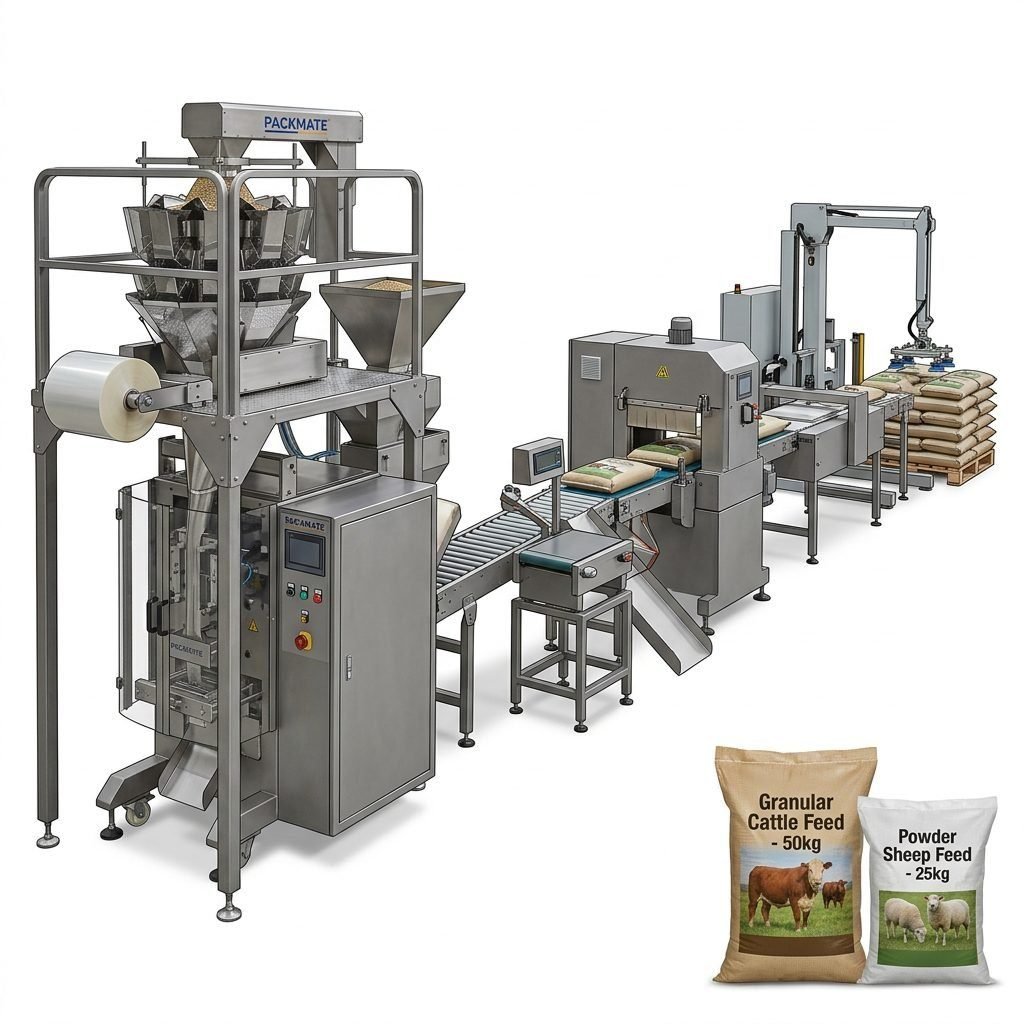
The foundation of accuracy lies here. Custom multi-head weighers or auger fillers are calibrated for the specific flow characteristics of your product, whether it’s a free-flowing granule or a cohesive powder. This eliminates underfills and costly overfills.
2. Precision Form-Fill-Seal (FFS) Units
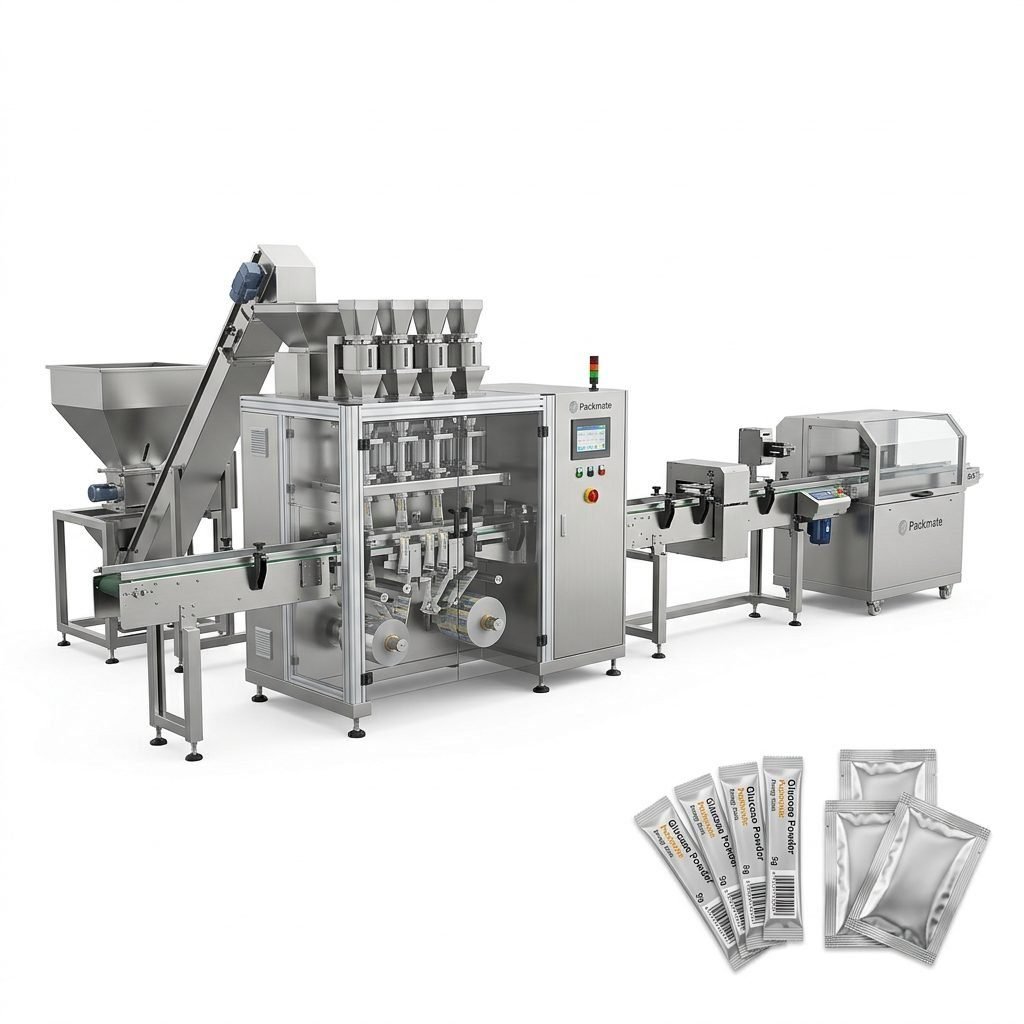
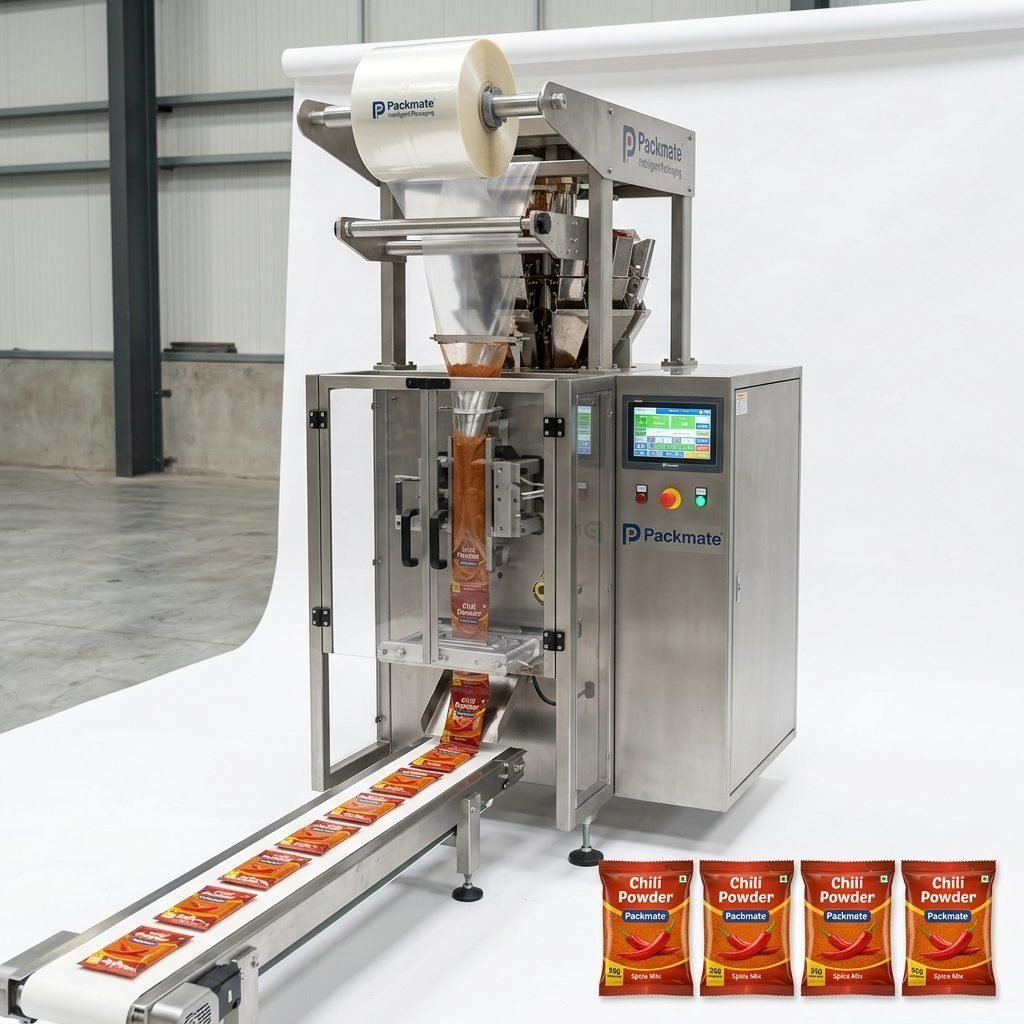
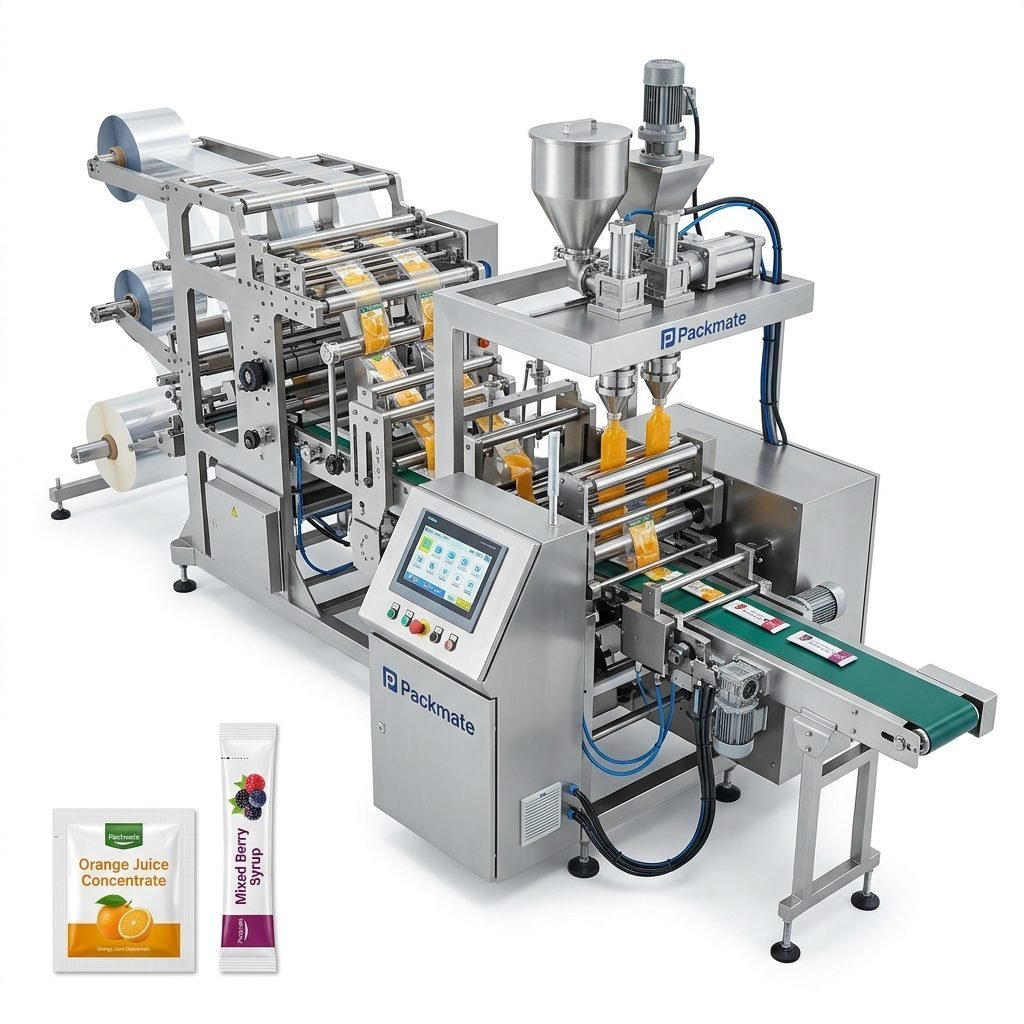
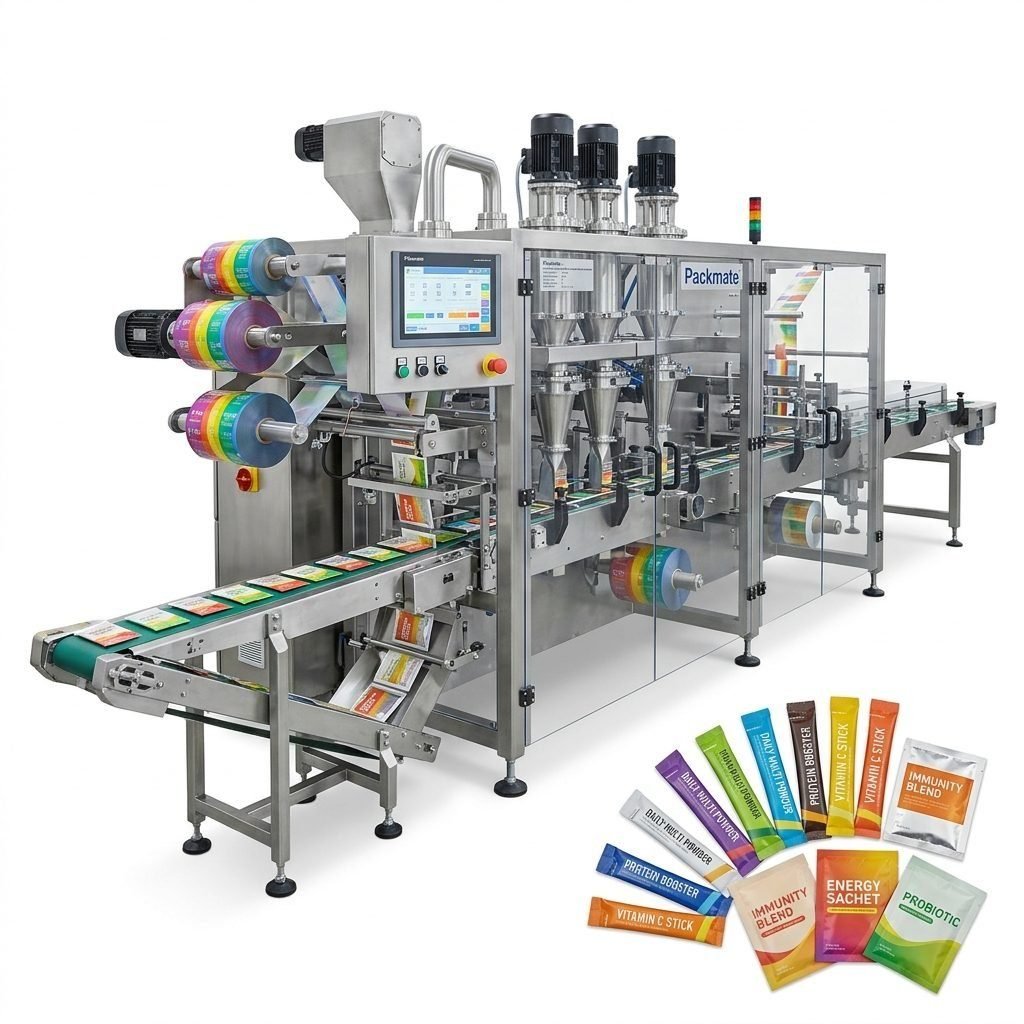
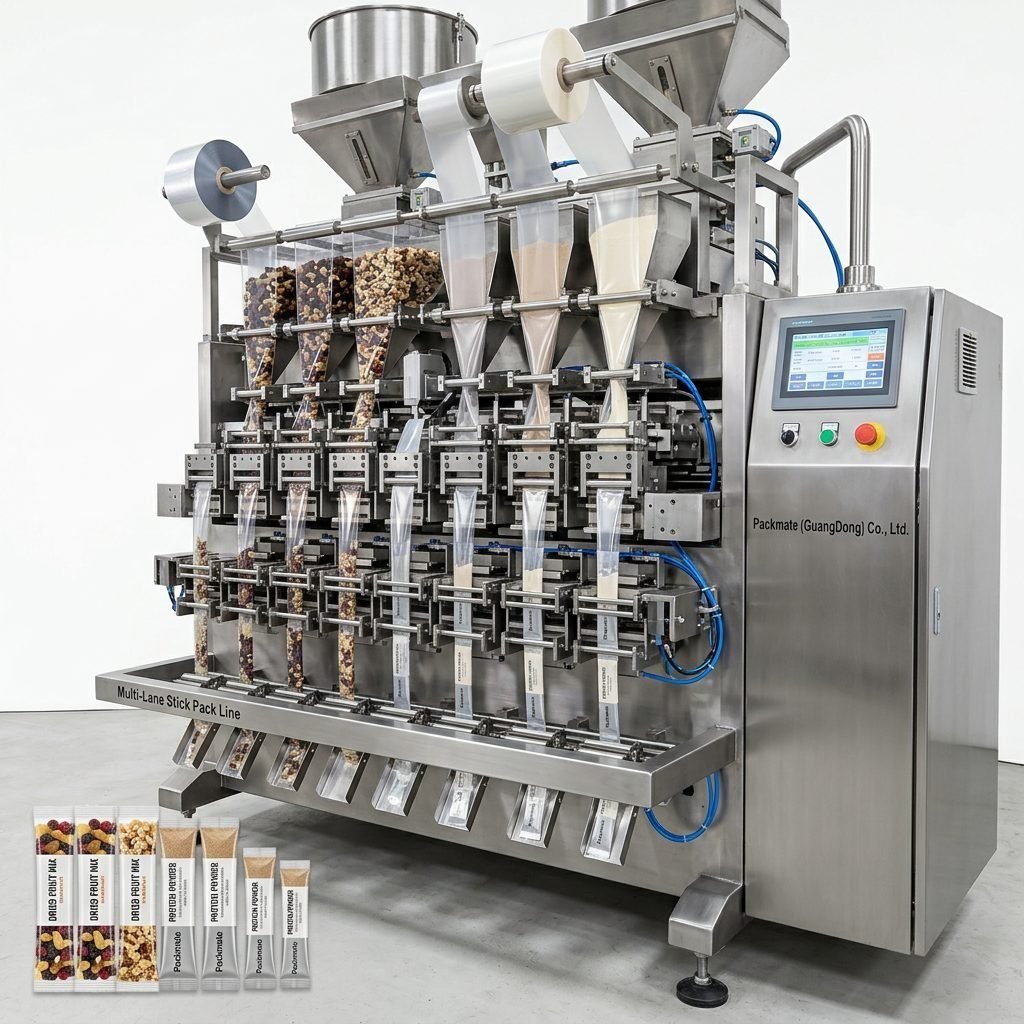
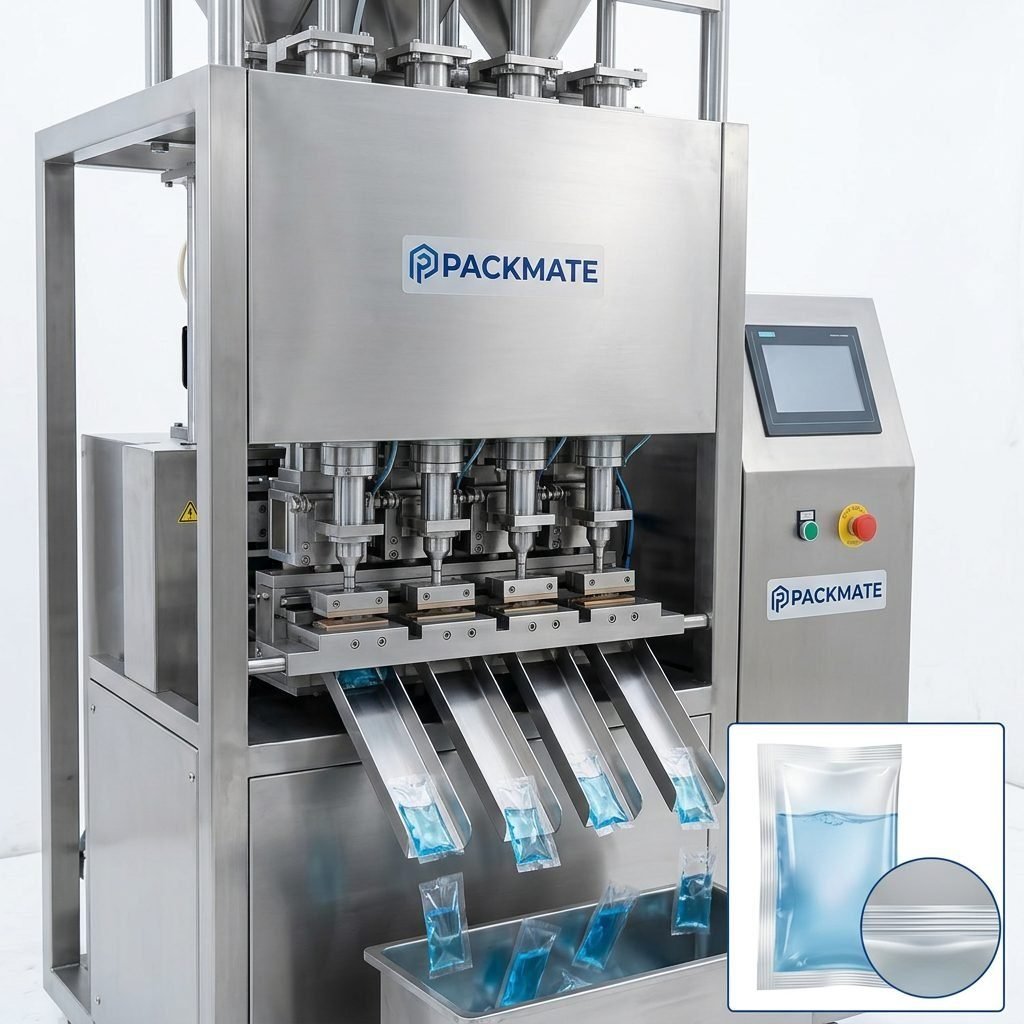
This is the heart of the packaging line. Custom FFS machines are configured to create the exact pouch, sachet, or stick pack from your chosen film material. The sealing jaws, film path, and forming collars are all tailored to ensure perfect seals and consistent package dimensions every time. Explore specific solutions like sachet & stick pack machines for examples of this technology.
3. Integrated Quality Control Checkpoints
Efficiency means getting it right the first time. Custom lines can include integrated checkweighers, metal detectors, or vision inspection systems that automatically reject any out-of-specification packages without stopping the production flow.
4. Smart Automation & Robotics
For end-of-line packaging, custom robotic palletizers or cartoning systems can be programmed to handle your specific package arrangement and case sizes, reducing labor and minimizing physical strain on workers.
Integrating these components into a cohesive filling & packaging line requires deep engineering knowledge. It’s a process that partners like Packmate undertake by first thoroughly understanding the client’s product and goals, then designing a system where every machine communicates flawlessly with the next.
The Role of Innovation and Experience
Behind every reliable custom machine is a story of innovation and accumulated experience. Packmate’s journey, beginning in a small workshop in 1993, exemplifies this. The founder’s passion for solving practical automation challenges evolved into a company with a 20,000㎡ modern manufacturing facility and over 30 years of expertise. This history is not just about age; it’s about encountering and solving thousands of unique packaging problems, which informs every new custom design. This depth of experience ensures that solutions are not only innovative but also robust and reliable in real-world production environments.
Implementing Your Custom Solution: A Strategic Partnership
Adopting custom packaging machinery is a strategic investment. The process typically follows a collaborative path:
- Consultation & Needs Analysis: Engineers work with you to analyze your product, materials, desired output, and factory layout.
- Concept & Design: A tailored machine or line concept is proposed, often with 3D simulations or lab tests using your actual product.
- Manufacturing & Factory Acceptance Test (FAT): The equipment is built in a controlled environment. You are invited to witness the FAT, where the machine runs with your materials to verify performance.
- Installation & Training: Experts install the line on your site and train your operators and maintenance staff thoroughly.
- Ongoing Support: A true partnership includes reliable after-sales service, access to spare parts, and technical support to ensure long-term productivity.
This turnkey approach, from concept to ongoing support, transforms the purchase from a simple transaction into a long-term productivity alliance. Viewing real-world case studies can provide insight into how this process delivers results for other manufacturers.
Conclusion: Efficiency as a Competitive Edge
Custom packaging machinery is far more than a piece of factory equipment; it is a strategic tool for building a more efficient, agile, and profitable production operation. By investing in a solution designed specifically for your product and throughput goals, you gain control over quality, reduce operational costs, and create the flexibility needed to adapt to market changes. In an era where consumer demands and regulatory standards are constantly evolving, having a packaging partner that can tailor technology to your needs is not just an advantage—it’s essential for sustainable growth.
Frequently Asked Questions (FAQs)
1. How long does it take to develop and deliver a custom packaging machine?
The timeline varies based on complexity, typically ranging from 3 to 9 months. It includes design, procurement, manufacturing, testing, and shipping. A detailed project plan with milestones is always provided upfront.
2. Is custom machinery more difficult to maintain than standard models?
Not necessarily. While unique, a well-designed custom machine uses standard, high-quality components for critical parts. Comprehensive training and detailed documentation are provided, and reliable suppliers offer full support for spare parts and service.
3. Can a custom packaging line be integrated with our existing equipment?
Yes, a key part of the design process is ensuring compatibility with your current infrastructure. Engineers will assess your existing conveyors, control systems, and plant layout to ensure seamless integration.
4. What is the typical ROI for investing in custom packaging equipment?
Return on Investment is often realized within 1-3 years through tangible savings: reduced material waste (precise filling), lower labor costs (increased automation), higher output, and fewer rejected products. The exact timeframe depends on your production volume and the inefficiencies the new machine solves.
5. How do we start the process of getting a custom solution?
The first step is a detailed consultation. Be prepared to share product samples, target packaging specifications, desired production speed, and any specific challenges you face. This allows the engineering team to provide a realistic proposal and concept design. You can initiate this process through a contact form or direct inquiry.