In the world of electronics manufacturing, the chip packaging machine is a cornerstone of production, transforming delicate semiconductor dies into robust, functional components ready for integration into countless devices. This critical process, known as semiconductor assembly and packaging, protects the chip from physical damage and environmental factors while providing the necessary electrical connections. For businesses looking to invest in this vital equipment, understanding the different types of chip packaging machines, their core functions, and key purchasing considerations is essential for making an informed decision that impacts production efficiency, yield, and ultimately, profitability.
Core Functions of a Chip Packaging Machine
The primary role of a chip packaging machine is to automate and precisely execute the series of steps required to encase a semiconductor die. While specific processes vary, the core functions generally include:
Die Attach: This is the first critical step where the bare silicon die is precisely placed and permanently bonded onto a substrate or lead frame using epoxy or solder.
Wire Bonding: Following die attach, ultra-fine wires (typically gold, aluminum, or copper) are used to create electrical connections between the pads on the die and the pins or leads of the package. This requires extreme precision.
Encapsulation / Molding: The assembled die and wires are then encapsulated in a protective plastic compound (for plastic packages) or sealed within a ceramic or metal cavity. This process shields the chip from moisture, dust, and mechanical stress.
Marking and Inspection: Finally, the packaged chip is laser-marked with identification codes and undergoes rigorous automated optical inspection (AOI) to ensure quality and detect any defects before shipment.
Major Types of Chip Packaging Machines
The landscape of chip packaging equipment is diverse, catering to different package types, production volumes, and levels of automation. Choosing the right type is fundamental to your operation’s success.
1. Die Attach Machines
These machines are specialized for the first bonding step. They use advanced vision systems to pick up the die from a wafer tape and place it with micron-level accuracy onto the target location. Modern die bonders can handle a variety of adhesives, including epoxy paste, film, and solder, making them versatile for different packaging requirements. High-speed models are essential for high-volume production lines.
2. Wire Bonders
Wire bonders form the electrical interconnects. There are two main technologies:
- Ball Bonders: Primarily use gold wire. They form a ball at the wire end using an electronic flame-off (EFO) and stitch it to the die pad, then create a wedge stitch on the substrate lead. They are known for speed and are common in high-volume IC packaging.
- Wedge Bonders: Can use gold, aluminum, or copper wire. They use a wedge-shaped tool to press and ultrasonically weld the wire flat against both the die pad and the lead. This method is often preferred for power devices and applications requiring fine-pitch bonding.
3. Molding / Encapsulation Systems
These systems protect the assembled unit. Transfer molding machines are most common for plastic packages. They heat and liquefy a thermosetting epoxy molding compound (EMC) and then use a plunger to transfer it into a mold cavity containing the lead frames with attached dies. The process requires precise control of temperature, pressure, and time to ensure complete filling without damaging the delicate wire bonds.
4. Turnkey Packaging Lines
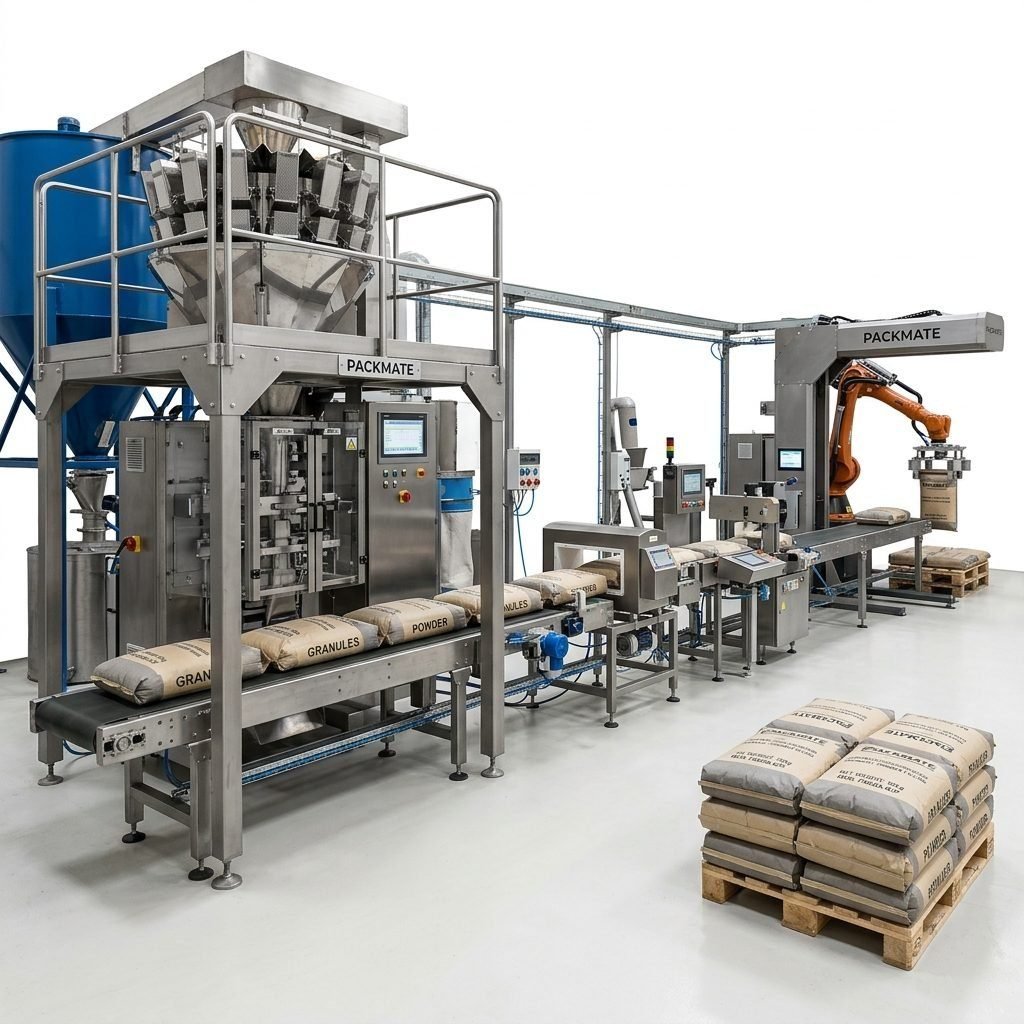
For maximum efficiency, manufacturers like Packmate Machinery offer integrated, turnkey solutions. These automated lines seamlessly connect die attach, wire bonding, molding, marking, and inspection stations with material handling robotics. They are designed for continuous, high-throughput production, minimizing human intervention and maximizing consistency. Exploring a company’s range of Filling & Packaging Lines can provide insight into how such integration is achieved.
Comprehensive Buying Guide: Key Factors to Consider
Investing in a chip packaging machine is a significant decision. Here are the crucial factors to evaluate to ensure you select equipment that aligns with your technical and business needs.
Technical Specifications & Compatibility
Package Type & Size: Clearly define the package formats you will be producing (e.g., QFP, BGA, QFN, DIP). The machine must be compatible with the substrate/lead frame dimensions and the final package outline.
Throughput (UPH – Units Per Hour): This is a direct measure of productivity. Calculate your required output and choose a machine that meets or exceeds it with a comfortable margin. Remember, theoretical maximum speed and sustainable production speed can differ.
Placement & Bonding Accuracy: Measured in microns (±µm). Higher accuracy is critical for advanced packages with finer pitches and smaller die sizes. Inquire about the machine’s vision system capabilities and calibration processes.
Automation & Integration Level
Determine how the machine will fit into your existing or planned workflow. Stand-alone machines offer flexibility, while fully automated lines with integrated Auxiliary Packaging Equipment like loaders, unloaders, and conveyors drastically reduce labor costs and human error. Consider future scalability—can the system be easily expanded or upgraded?
Reliability, Support, and Total Cost of Ownership (TCO)
The initial purchase price is just one part of the equation. Investigate the machine’s mean time between failures (MTBF) and mean time to repair (MTTR). A reliable machine from a reputable manufacturer minimizes costly downtime. Assess the supplier’s support network: Is local technical service available? What are the lead times for spare parts? Reviewing a manufacturer’s track record, such as the Company Profile of an established player, can provide confidence in their longevity and commitment to quality. The TCO includes maintenance contracts, consumables (wires, epoxy, molding compound), utilities, and training.
Optimizing Your Packaging Operation
Beyond selecting the right machine, successful chip packaging hinges on process optimization and quality control. Implementing Statistical Process Control (SPC) to monitor key parameters like bond strength and epoxy bleed is vital. Regular preventive maintenance, operator training, and using high-quality, consistent raw materials are non-negotiable for achieving high yields and product reliability. Partnering with an equipment provider that offers comprehensive Service and support can be a major advantage in maintaining peak operational performance.
Frequently Asked Questions (FAQs)
What is the main difference between a die bonder and a wire bonder?
A die bonder is responsible for physically attaching the semiconductor die to the substrate or lead frame. A wire bonder comes next, creating the fine electrical connections between the die and the package’s external leads. They perform two distinct, sequential functions in the packaging process.
How do I choose between a ball bonder and a wedge bonder?
The choice depends on your application and materials. Ball bonders (typically with gold wire) are faster and ideal for high-volume IC packaging. Wedge bonders offer more flexibility in wire material (Al, Cu, Au) and are better suited for fine-pitch applications, power devices, and situations where a lower loop profile is needed.
What are the most critical maintenance tasks for a chip packaging machine?
Daily cleaning of work surfaces and bond tools, regular calibration of vision systems and force sensors, and scheduled replacement of consumable parts like capillaries (for ball bonding) or wedges are paramount. Following the manufacturer’s detailed preventive maintenance schedule is crucial to prevent unplanned downtime.
Can one machine handle multiple different package types?
Many modern machines are designed with flexibility in mind. Through quick-change tooling kits, adjustable workholders, and programmable recipes, a single machine can often be reconfigured to run several different package types. However, there are always limits based on the machine’s physical dimensions and capability range, so this must be verified with the supplier.
What should I look for in a machine supplier beyond the equipment itself?
Prioritize suppliers with a strong reputation for reliability, readily available spare parts, and responsive technical support—both remote and on-site. Comprehensive training for your engineers and operators, detailed documentation, and a willingness to collaborate on process optimization are invaluable indicators of a good long-term partner.