In the fast-paced world of industrial production and logistics, efficiency is paramount. One of the critical components in streamlining the movement of goods is the pallet packaging machine. These machines automate the process of securing and stabilizing products on pallets for storage and transportation. Whether you are in food processing, pharmaceuticals, or manufacturing, understanding the different types of pallet packaging machines, their benefits, and how to select the right one can significantly impact your operational efficiency and bottom line.
Understanding Pallet Packaging Machines
Pallet packaging machines, often encompassing pallet wrappers and stretch hooders, are designed to apply protective film or hoods around palletized loads. The primary goal is to create a unitized, stable, and protected load that can withstand the rigors of handling and transit. This automation replaces manual wrapping, which is time-consuming, inconsistent, and labor-intensive.
Key Function: The core function of any pallet packaging machine is to apply tensioned film around a load. This tension creates a compressive force that holds the items on the pallet together, preventing shifting, toppling, and damage from moisture or dust.
Primary Types of Pallet Packaging Machines
The market offers several types of machines, each suited to different production volumes, load types, and operational needs.
1. Semi-Automatic Pallet Wrappers
These machines require an operator to manually place the load on the turntable, attach the film, and initiate the wrapping cycle. The machine then rotates the load while a carriage dispenses the film. They are an excellent cost-effective entry point for businesses with moderate to low throughput.
- Best for: Smaller warehouses, varied load sizes, and operations with fluctuating production volumes.
- Advantage: Lower initial investment and flexibility.
2. Fully Automatic Pallet Wrappers
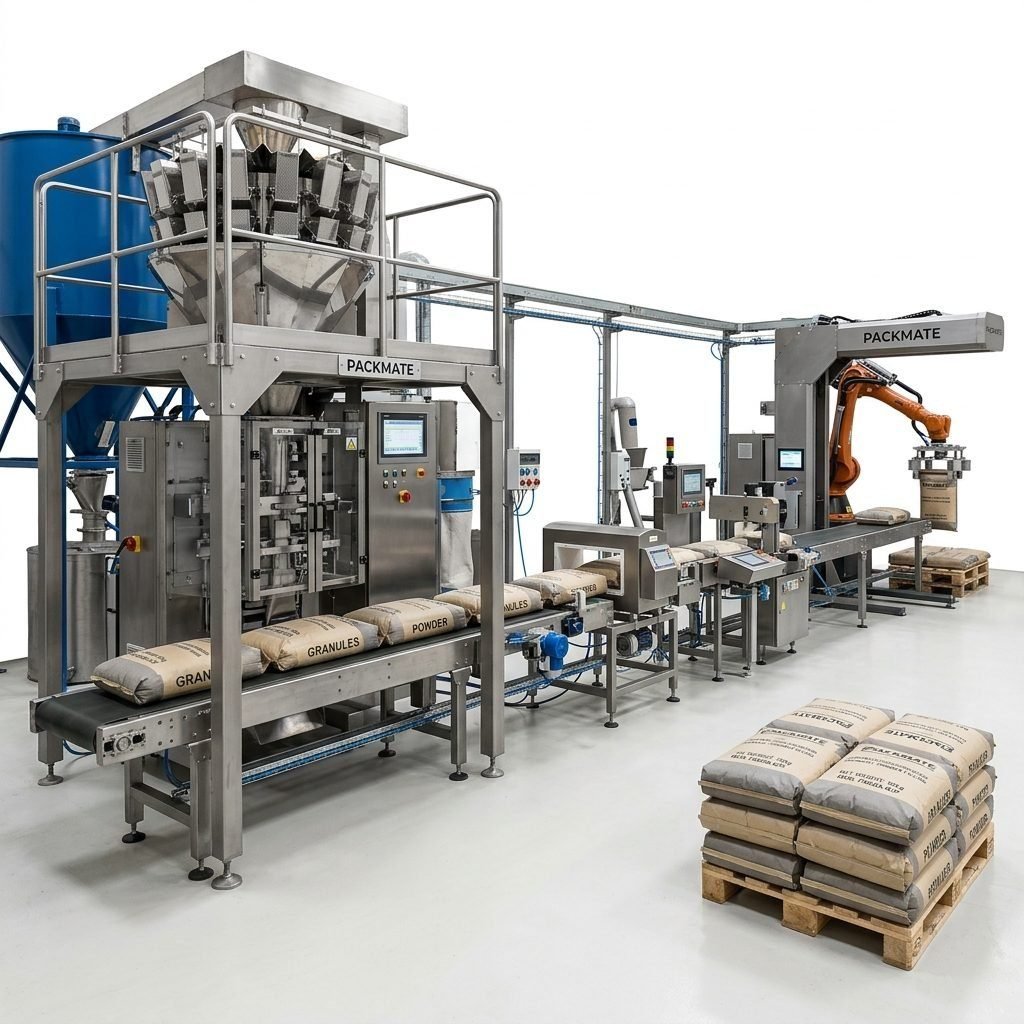
Fully automatic systems integrate seamlessly with conveyor lines. The machine senses an incoming pallet, positions it, wraps it according to pre-set programs, and then releases it onto the outfeed conveyor—all without manual intervention. This is ideal for high-speed production environments.
Operational Efficiency: These machines can handle a very high number of pallets per hour, significantly reducing labor costs and ensuring consistent, repeatable wrap quality every time.
3. Robotic Pallet Wrappers
Robotic wrappers use a multi-axis robotic arm to manipulate the film around the load. This offers unparalleled flexibility in wrap patterns, allowing for complex and secure wrapping of irregularly shaped loads that a traditional rotary machine might struggle with.
4. Stretch Hood Machines
Instead of spiral wrapping, stretch hooders place a pre-stretched plastic hood over the entire pallet load. This creates a weather-resistant, tamper-evident seal that is superior for outdoor storage or long-distance shipping. It’s commonly used in the building materials, beverage, and bagged goods industries.
Tangible Benefits of Automating Pallet Packaging
Investing in a pallet packaging machine delivers a strong return on investment through multiple channels.
- Major Labor Savings: Automating the wrapping process frees up skilled workers for more value-added tasks, reducing dependency on manual labor and associated costs.
- Consistent and Reliable Load Security: Machines apply the exact same force and overlap every cycle, eliminating human error and creating uniformly secure loads that minimize product damage during shipping.
- Significant Film Savings: Advanced machines come with film tension control and pre-stretch systems that can stretch film up to 300%, dramatically reducing the amount of film used per pallet compared to manual wrapping.
- Enhanced Workplace Safety: Removing the repetitive strain of manual wrapping reduces the risk of worker injuries. Automatic systems also minimize interaction with moving parts.
- Improved Operational Throughput: Automatic machines can wrap pallets in a fraction of the time it takes manually, accelerating your entire shipping and logistics line.
How to Choose the Right Pallet Packaging Machine: A Strategic Guide
Selecting the ideal machine requires a careful analysis of your current and future needs. Partnering with an experienced manufacturer like Packmate Machinery, with over 22 years of development in automation, can provide invaluable guidance.
Step 1: Assess Your Production Profile
Start by quantifying your needs. How many pallets do you wrap per shift or per hour? What are the typical dimensions (height, width, weight) of your loads? Do you have a consistent flow, or does it peak and trough? High-volume operations with consistent pallet sizes are prime candidates for a fully automatic packaging line.
Step 2: Evaluate Load Characteristics
Consider the stability of your loads. Are they sturdy boxes, unstable bags, or irregular shapes? Light or unstable loads may need a machine with top platen stabilization. For bags or porous loads, a stretch hooder might be necessary to prevent film from embedding into the product. Explore solutions for different products in the bag & pouch packaging machines category.
Step 3: Consider Integration and Footprint
Will the machine be a standalone station or integrated into an existing conveyor system? Measure the available floor space. Automatic wrappers require space for infeed and outfeed conveyors. A trusted supplier can help design a layout that optimizes your workflow.
Step 4: Analyze Film Usage and Cost
Inquire about the machine’s pre-stretch capabilities. Higher pre-stretch ratios mean lower film consumption. Calculate your current annual film spend—the savings from an efficient machine can often justify the capital expenditure.
Step 5: Prioritize Supplier Support and Reliability
This is perhaps the most critical step. The machine is a long-term investment. Choose a manufacturer known for quality, reliability, and strong after-sales service. Review their company history, like that of Packmate, which evolved from a small workshop in 1993 to a modern 20,000㎡ facility, demonstrating a commitment to innovation and durability. Check their available service and support offerings, including installation, training, warranty, and spare parts availability.
Conclusion
A pallet packaging machine is not just a piece of equipment; it’s a strategic tool for enhancing efficiency, safety, and cost-effectiveness in your supply chain. By understanding the different types—from semi-automatic wrappers to fully integrated robotic systems—and carefully evaluating your specific needs against the key selection criteria, you can make an informed investment that will pay dividends for years to come. Partnering with a proven, experienced manufacturer ensures you get a solution tailored to your challenges and backed by reliable support.
Frequently Asked Questions (FAQs)
1. What is the main difference between a stretch wrapper and a stretch hooder?
A stretch wrapper applies film in a spiral pattern around the load, while a stretch hooder places a single, pre-stretched plastic hood over the entire pallet. Hooding offers better weather and dust protection and is often faster for uniform loads.
2. How much can I save on film with an automatic machine?
Savings vary, but modern pre-stretch systems can stretch film by 250-300%. This can reduce film usage by 50% or more compared to manual wrapping, leading to substantial annual cost savings.
3. Can one machine handle all my different pallet sizes?
Most modern machines are programmable for multiple load profiles. You can save settings for different pallet heights and widths, and the machine will adjust automatically when the profile is selected.
4. How important is after-sales service when purchasing?
Extremely important. Machine downtime is costly. Ensure your supplier offers prompt technical support, readily available spare parts, and comprehensive operator training to maximize uptime and machine lifespan.
5. What power supply do I need for an automatic pallet wrapper?
Most standard automatic pallet wrappers require a standard three-phase industrial power supply (e.g., 380V/50Hz or 480V/60Hz). Always confirm the specific electrical requirements with the manufacturer before installation.