Selecting the right packaging machinery is a critical decision for any business aiming to streamline operations, enhance product presentation, and ensure product integrity. The vast array of equipment available can be overwhelming. This guide explains the different types of packaging machinery, their functions, and how they can benefit your specific business needs.
Core Categories of Packaging Machinery
Packaging machinery can be broadly classified based on the primary function it performs in the packaging line. Understanding these categories is the first step in identifying the right equipment for your production process.
Filling Machines
These machines are responsible for accurately dispensing your product into containers, pouches, or bags. The type of filler depends heavily on the product’s form.
Liquid Fillers: Used for beverages, oils, sauces, and chemicals. Common types include gravity fillers, piston fillers, and volumetric pump fillers, prized for their speed and accuracy.
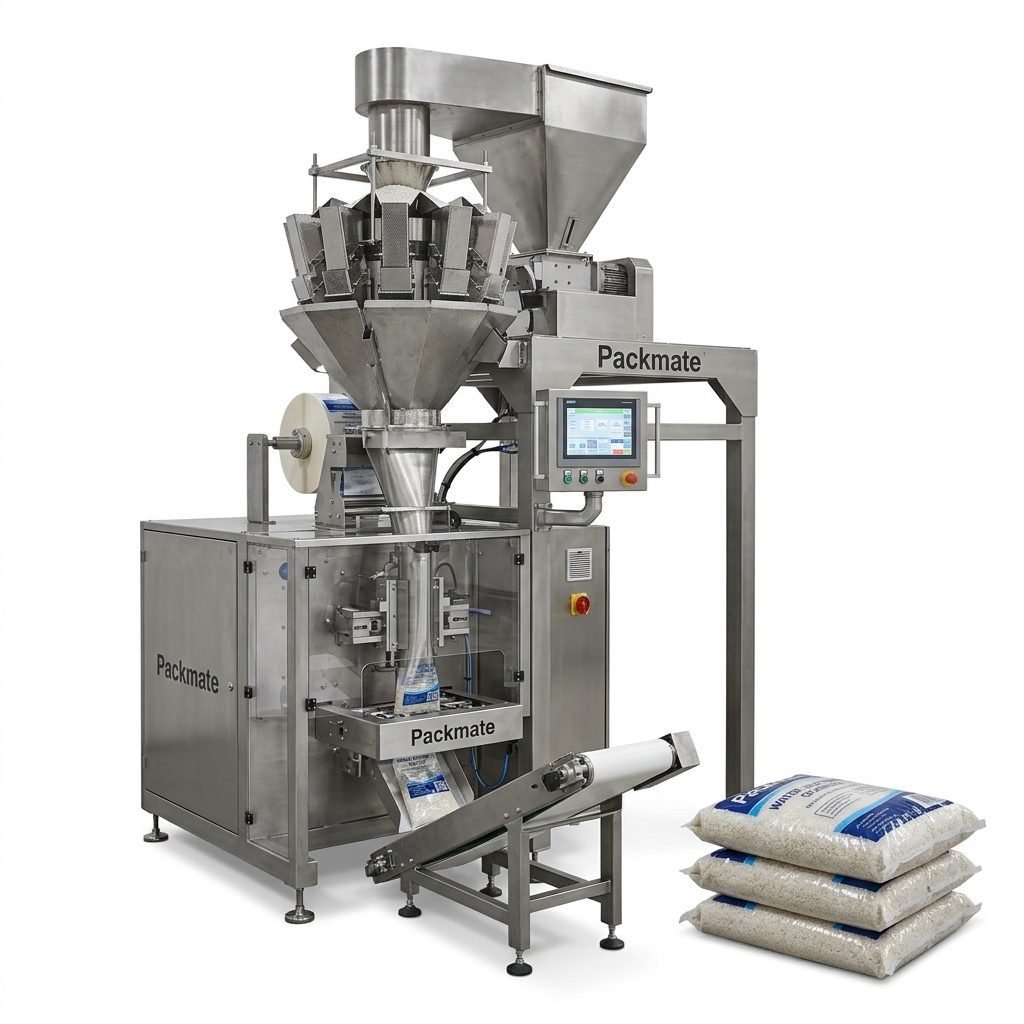
Powder & Granule Fillers: Essential for food items like coffee, spices, and pharmaceuticals. Auger fillers use a rotating screw for precise measurement, while weigh fillers use scales for ultimate accuracy, especially for valuable products.
Viscous Product Fillers: Handle pastes, gels, and creams. Piston fillers are often the go-to choice for their ability to manage thick, non-flowing substances consistently.
Sealing Machines
Once filled, the package must be securely closed. Sealing technology varies by packaging material.
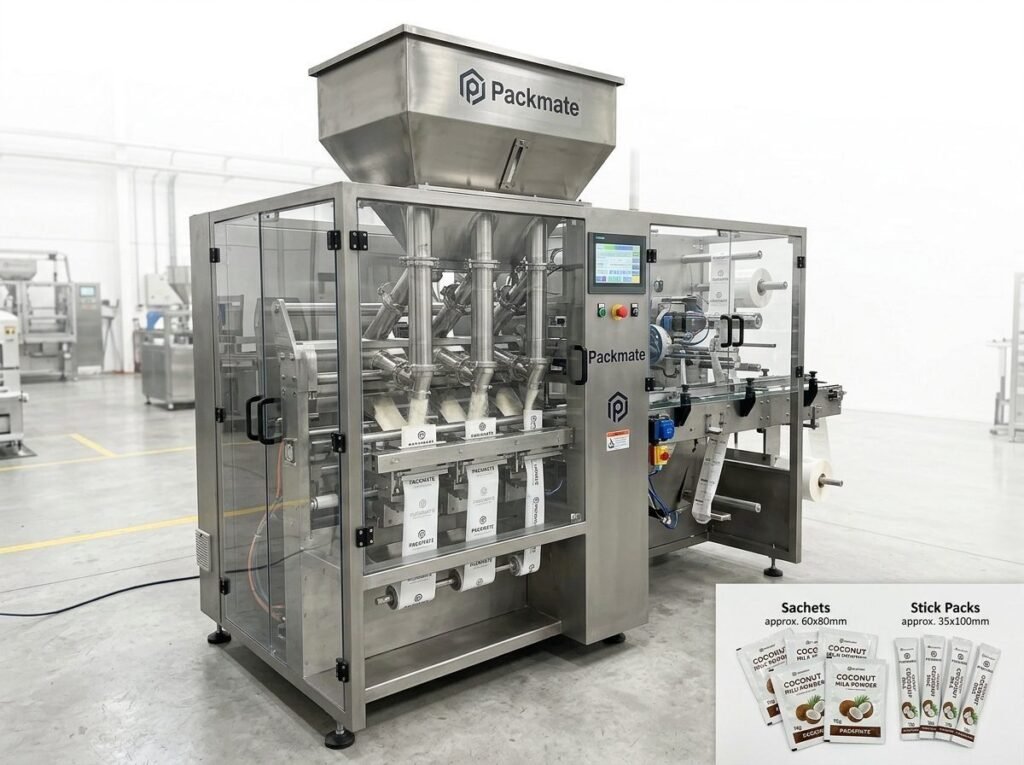
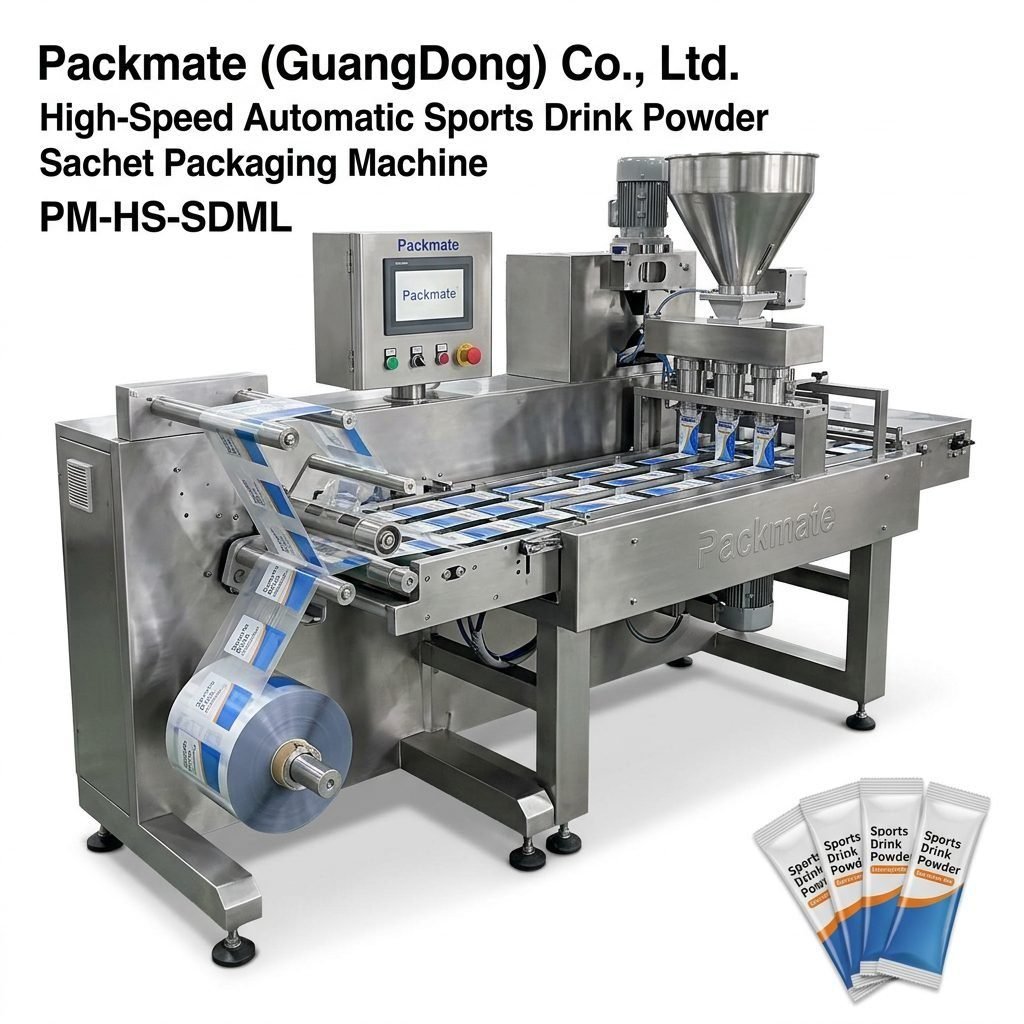
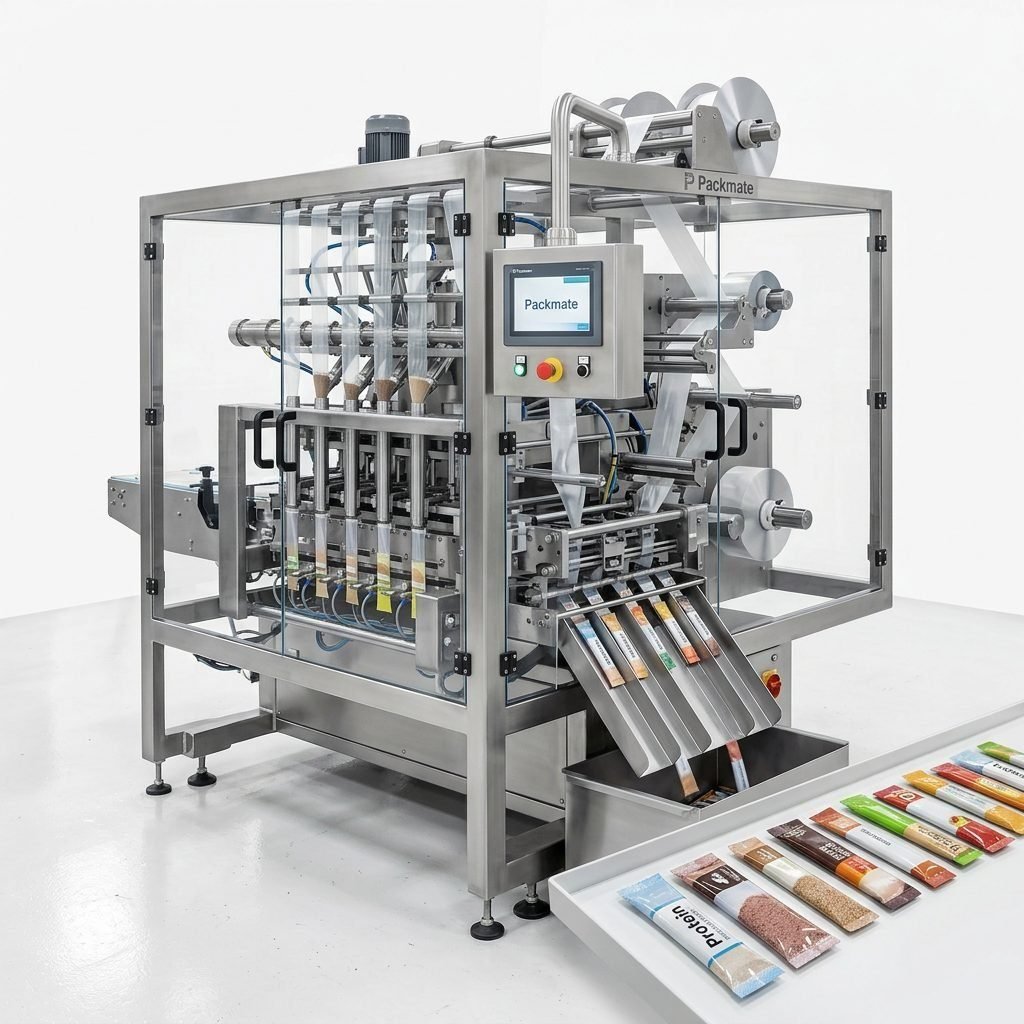
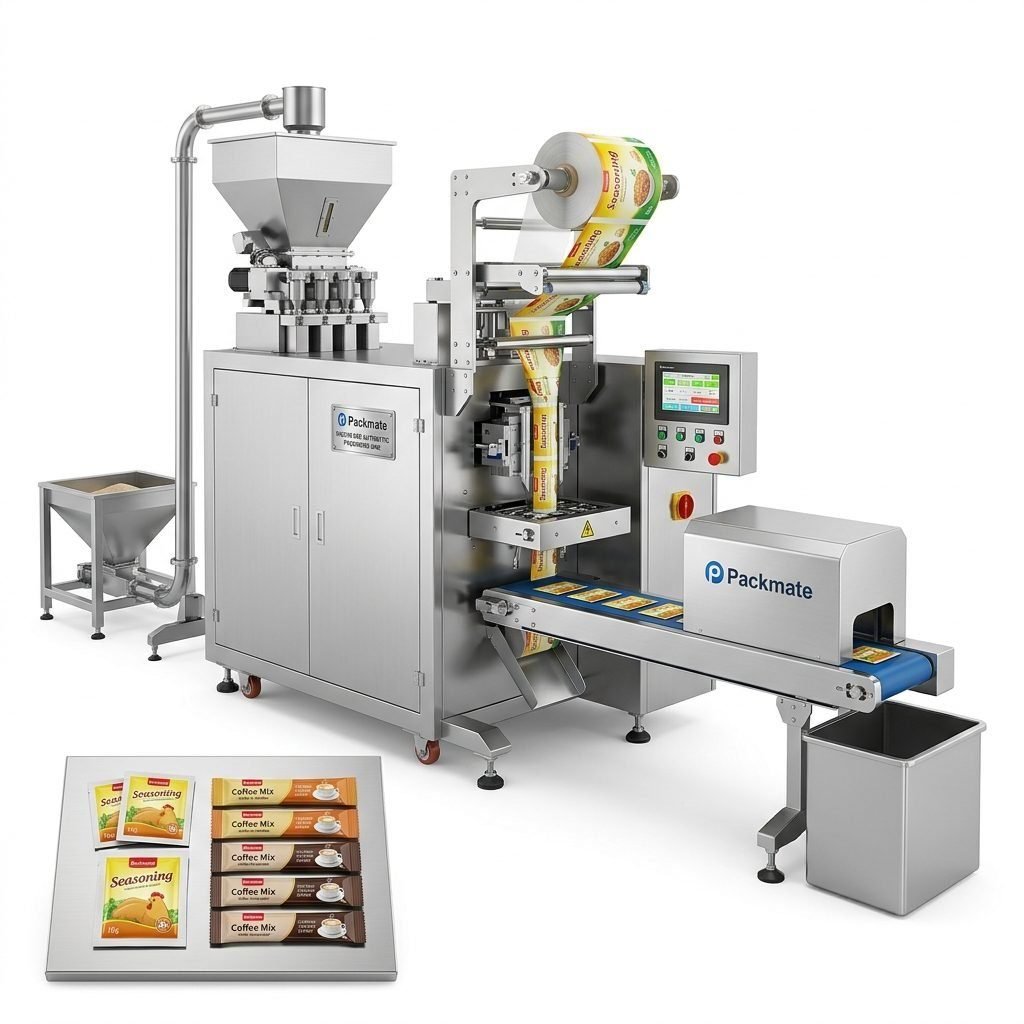
Heat Sealers: The most common method for plastic films and laminates. They apply heat and pressure to melt the inner layer of the film, creating a hermetic seal. This is standard for sachet and stick pack machines.
Induction Sealers: Create a tamper-evident seal on bottles by applying an electromagnetic field to a foil liner under the cap, bonding it to the container rim.
Carton Sealers: Automatically apply adhesive tape or hot melt glue to the top and/or bottom flaps of corrugated boxes, drastically speeding up the shipping process.
Wrapping and Bundling Machines
This category involves enclosing products or groups of products for protection, stability, and retail display.
Flow Wrappers: Use a continuous roll of film to wrap individual products like candy bars, bakery items, or software boxes, producing a tight, neat finish.
Shrink Wrappers: Encase products or multi-packs in a loose sleeve of plastic film, which then passes through a heat tunnel, causing the film to shrink tightly around the contents. Ideal for bundling bottles or securing promotional packs.
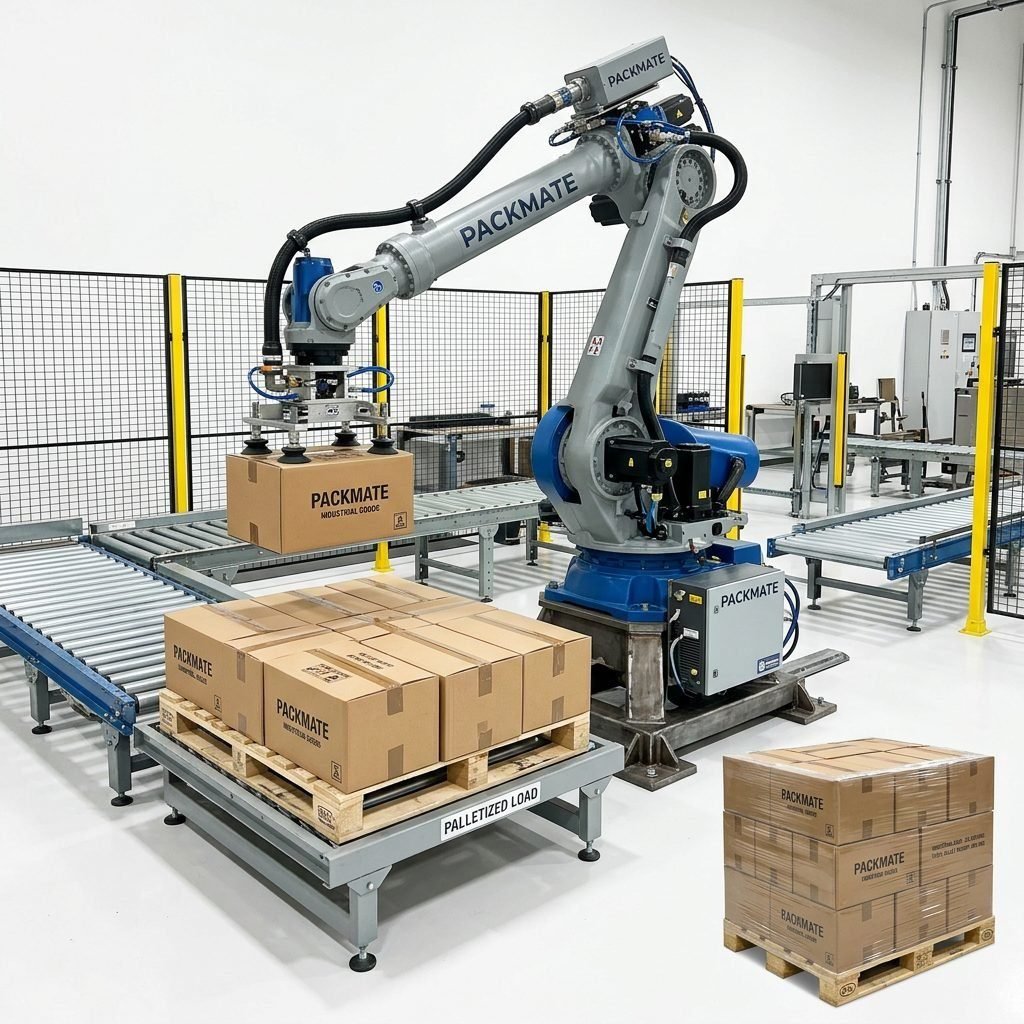
Stretch Wrappers: Primarily used for pallet stabilization. A rotating arm spirally applies stretch film around a loaded pallet to secure it for transport and storage.
Specialized Packaging Systems
Beyond the core functions, specialized systems handle unique packaging formats and complex, integrated processes.
Form-Fill-Seal (FFS) Machines
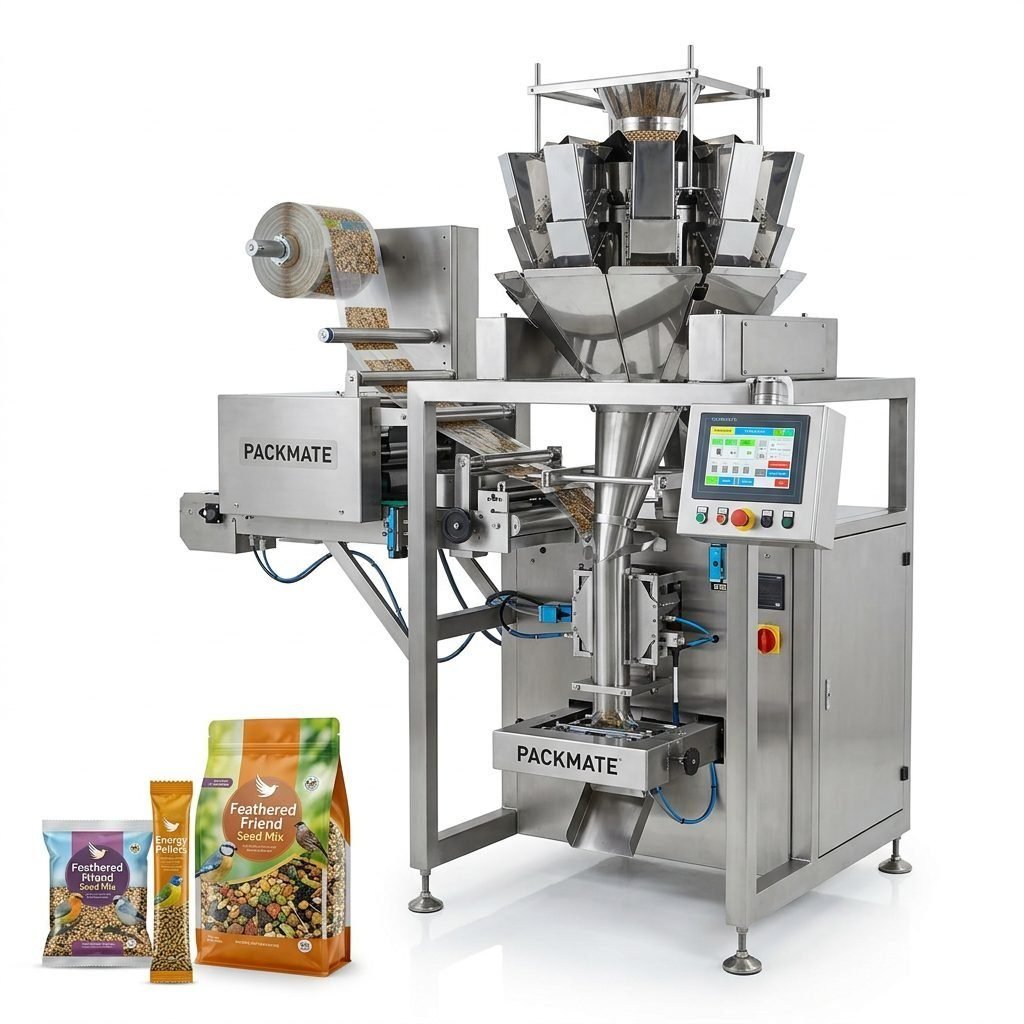
These are highly efficient, all-in-one systems that form the package from a roll of film, fill it with product, and seal it—all in a continuous operation. They are a cornerstone of modern packaging for their speed and material efficiency.
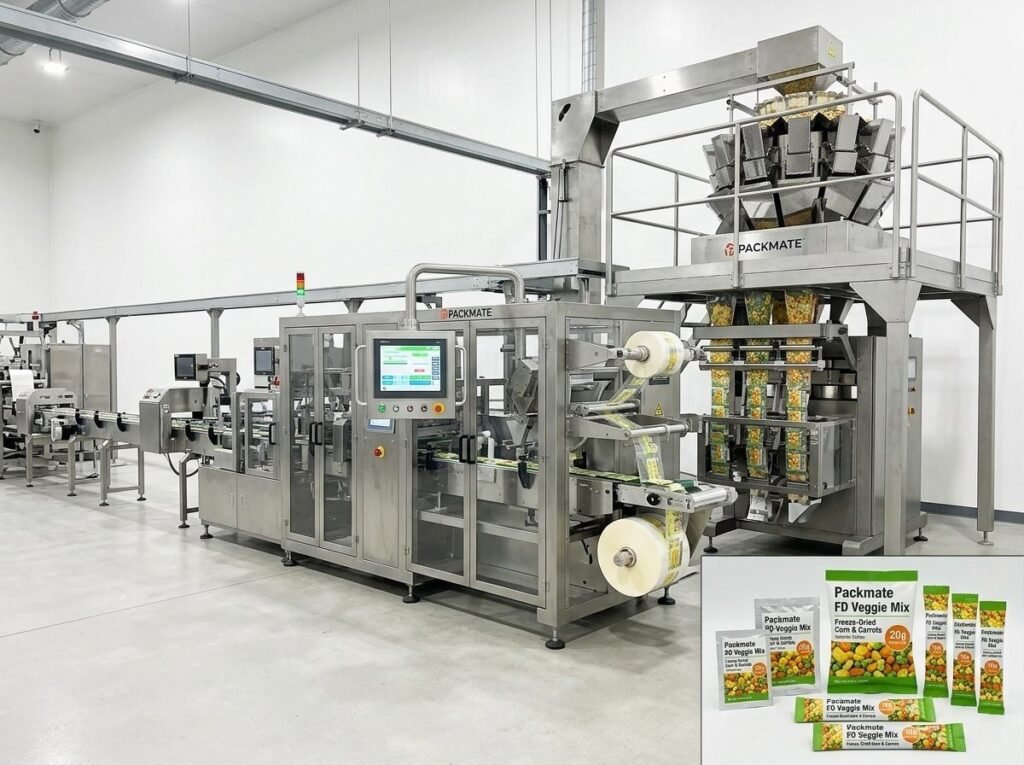
Vertical Form-Fill-Seal (VFFS): The film is formed into a vertical tube, filled from above, and then sealed horizontally. Perfect for bag and pouch packaging of snacks, grains, and hardware items.
Horizontal Form-Fill-Seal (HFFS): The film is formed horizontally around the product, ideal for wrapping individual bars, biscuits, or tools that are placed into the machine.
Labeling and Coding Machines
These apply vital information and branding to your packages.
Label Applicators: Automatically apply pressure-sensitive labels to containers, boxes, or products with high precision. Options include front/back labeling, wrap-around labeling, and top labeling.
Print & Apply Systems: Integrate a printer to create variable data labels (like barcodes, batch numbers, expiry dates) and immediately apply them.
Inkjet and Laser Coders: Directly print dates, lot codes, and logos onto packaging surfaces without the need for labels, offering flexibility and low consumable costs.
Choosing Machinery for Your Product Type
The nature of your product dictates the machinery requirements. Here’s a breakdown by common product forms.
Machinery for Solids & Discrete Items
Products like hardware, confectionery, or medical devices often use counting or weighing systems.
Multi-lane Weighing Systems: For high-speed counting and bagging of pills, capsules, or small parts. Products are fed into multiple lanes and combined to achieve the exact count. Explore our weighing and packaging systems for advanced solutions.
Pick-and-Place Robots: For delicate, irregularly shaped, or high-value items that require gentle handling and precise orientation within the package.
Machinery for Powders & Granules
These free-flowing products demand excellent containment and accuracy.
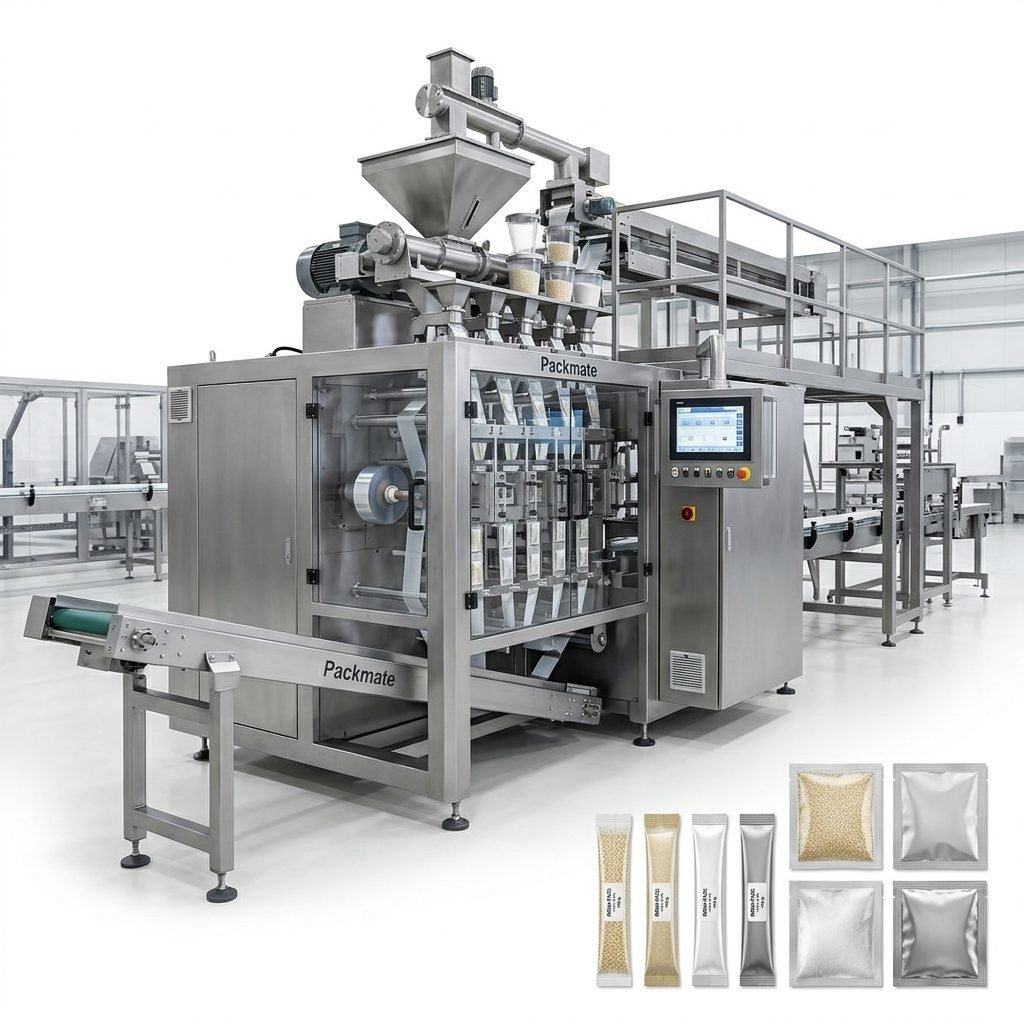
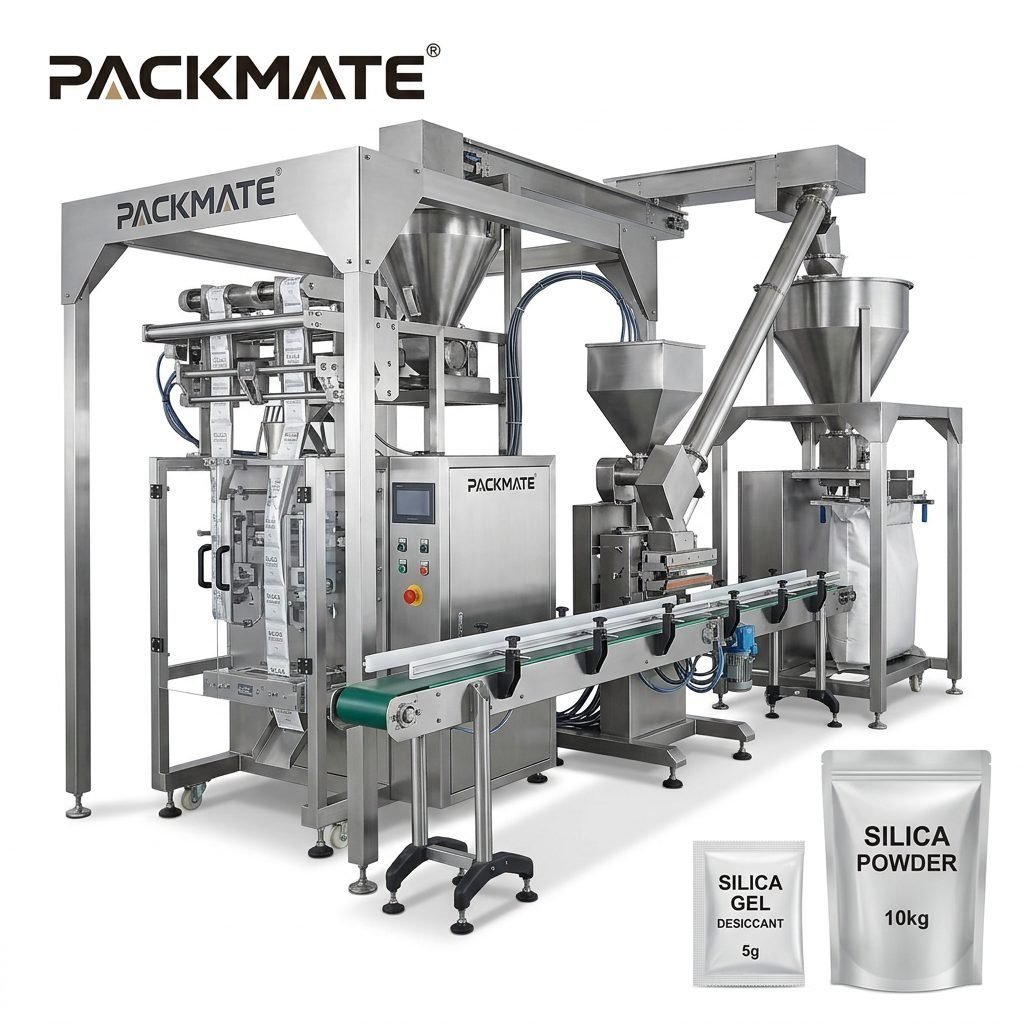
Auger Filling Lines: The industry standard for speed and containment, minimizing dust. Crucial for food and pharmaceutical powders.
Weigh Filling Lines: Provide the highest degree of accuracy by weighing each dose, essential for premium coffee, nutritional supplements, and chemicals sold by weight.
Machinery for Liquids & Viscous Products
From water to toothpaste, these require leak-proof seals and consistent fill volumes.
Piston Fillers: Excellent for creams, pastes, and thick sauces. The product is drawn into a cylinder and then pushed out into the container.
Gravity/Pressure Fillers: Best for thin, free-flowing liquids like juices and cleaning products. They fill quickly and can handle foamy products with specialized controls.
For a complete solution, a fully integrated filling and packaging line combines these fillers with capping, labeling, and sealing units.
Key Factors in Selecting Packaging Machinery
Beyond product type, several business and operational factors influence the ideal machine choice.
Production Speed & Output: Match the machine’s cycles-per-minute (CPM) to your required daily/weekly output. Consider future growth to avoid immediate obsolescence.
Flexibility & Changeover: If you run multiple products or package sizes, look for machines with quick-change parts and easy-to-program settings to minimize downtime.
Footprint & Layout: Measure your available floor space. Vertical machines often save space, while horizontal lines may require more length but offer easier manual access.
Total Cost of Ownership: Look beyond the purchase price. Consider energy consumption, required operator skill level, maintenance costs, and the availability/price of spare parts and service.
FAQs: Common Questions About Packaging Machinery
What is the most important factor when choosing a packaging machine?
The most critical factor is product compatibility. The machine must be engineered to handle your specific product’s characteristics (size, shape, weight, texture, aggressiveness) and your packaging material reliably and without causing damage or waste.
Should I buy a new or used packaging machine?
New machines offer the latest technology, warranties, and manufacturer support. Used machines can be a cost-effective entry point but may come with hidden maintenance issues and obsolete controls. For critical production, new or professionally refurbished machines from a reputable supplier like Packmate Machinery are often the safer long-term investment.
How do I ensure my packaging line is efficient?
Efficiency comes from integration and synchronization. Ensure all machines in the line (filler, capper, labeler, case packer) are matched in speed and communicate seamlessly. Proper line layout to minimize product transfer distances and using automated conveyors instead of manual handling are also key.
What kind of maintenance do packaging machines require?
Regular preventive maintenance is essential. This typically includes daily cleaning, lubrication of moving parts as specified, inspection of seals and wear parts, and calibration of weighing and filling systems. Following the manufacturer’s maintenance schedule is crucial for uptime and longevity.
Can one machine handle multiple different package sizes?
Many modern machines are designed with changeover flexibility. Look for machines with adjustable parts (like forming tubes, fill heads, or sealing jaws) and digital controls that store settings for different products. The ease and speed of this changeover process is a key specification to inquire about.